
Car Carriers vs Tow Trucks: Which Transport Option Suits Your Vehicle?
When a vehicle needs to be moved rather than driven, choosing the right transport method can make the process much easier. Car carriers and tow trucks can both move vehicles, but they suit different situations, access conditions and vehicle problems.
Understanding car carriers vs tow trucks is especially useful for Sydney drivers because collection points can range from open dealerships to narrow residential streets and underground car parks. If a vehicle needs direct collection or controlled loading, a car towing service may be more practical than arranging transport on a larger carrier.
The best choice depends on the vehicle’s condition, pickup location, ground clearance, destination and whether the transport is urgent or planned. Looking at these factors first can prevent delays and help ensure the right equipment arrives.
What Is the Main Difference Between a Car Carrier and a Tow Truck?
The main difference is usually how the vehicle is collected and how many vehicles are transported at the same time. A car carrier often moves several vehicles on one planned route, while a tow truck usually handles direct collection of one vehicle.
Both options can be useful, but they solve different transport problems. The right choice becomes clearer once you consider access, vehicle condition and delivery timing.
How a Car Carrier Works
A car carrier is designed to transport multiple vehicles using several loading positions. These vehicles may be collected from dealerships, auction yards, storage facilities or other locations where there is enough space for a large transporter to operate.
Because several vehicles may travel on the same route, pickup and delivery times can depend on other scheduled stops. This can work well for planned vehicle movements where timing is flexible and direct recovery is not required.
Car carriers commonly suit:
- Dealer stock transfers
- Auction vehicle transport
- Fleet relocation
- Multiple vehicles moving together
- Planned long-distance transport
They are most practical where there is enough room for the transporter to enter, turn and load safely. Restricted access can make a larger carrier difficult to use.
How a Tow Truck Works
A tow truck usually focuses on one vehicle at a time and can collect it directly from its current location. Depending on the truck and vehicle condition, the car may be winched onto a tray or loaded using another suitable method.
This makes tow trucks useful for breakdowns, workshop transfers, damaged vehicles and direct vehicle relocation. They can also be more practical when the vehicle cannot drive onto transport equipment under its own power.
Why Pickup Access Matters in Sydney
The transport method is often decided by the location before the vehicle itself is considered. Sydney has narrow streets, apartment basements, steep driveways and commercial areas where a large transporter may not have enough room to position safely.
Providing access details before booking helps the towing provider decide what type of truck can physically reach the vehicle. This is especially important when there are height restrictions or limited turning space.
Underground and Restricted Parking Areas
Underground car parks can create problems because of low ceilings, tight ramps and narrow corners. A large carrier may not be able to enter at all, while some tow trucks may also require careful access planning.
Useful information to provide includes the entrance height, ramp angle and width of the driveway. You should also explain where the car is parked and whether it can roll or steer.
Residential Streets and Tight Driveways
Narrow suburban streets can also affect collection, particularly when both sides of the road are lined with parked cars. A large carrier may struggle to turn or position itself for loading.
A smaller or more direct towing setup can sometimes work better in these locations. This is one reason the comparison between car carriers vs tow trucks should consider access rather than transport distance alone.
Vehicle Condition Can Decide the Transport Method
A vehicle that starts and rolls normally is much easier to load than one with damaged wheels or steering problems. The towing provider needs to know exactly what the vehicle can and cannot do before arriving.
Simply saying that the car is “not working” may not provide enough information. Explaining whether it starts, rolls, steers and enters neutral can make the loading plan much clearer.
Cars That Roll and Steer Normally
A vehicle that rolls and steers can usually be positioned more easily on a tray or carrier deck. Even if the engine does not start, it may still be possible to winch the car onto suitable transport equipment.
Tell the provider whether the parking brake releases and whether the car can be placed into neutral. These details can change the amount of equipment needed at pickup.
Non-Running or Difficult-to-Move Vehicles
Some non-running vehicles still roll freely, while others may have locked wheels or severe mechanical problems. Vehicles with damaged suspension, electronic brake faults or major tyre damage can require a different loading method.
In these situations, tilt tray towing may be useful because the vehicle can often be winched onto the tray. The provider should still assess whether the vehicle’s condition is suitable for that particular setup.
Car Carriers vs Tow Trucks: Quick Comparison
The table below gives a simple overview of common situations and which option may be more suitable. It is not a fixed rule because the final decision should still be based on the vehicle and collection site.
| Transport situation | Car carrier | Tow truck |
|---|---|---|
| Several vehicles moving together | Very suitable | Less practical |
| One car going directly to a workshop | Possible | Often more direct |
| Non-running vehicle | Depends on loading setup | Often suitable |
| Underground car park | Usually difficult | Depends on access |
| Narrow residential street | Can be difficult | Often easier |
| Dealer or auction movement | Common option | Also possible |
| Locked wheels | May need extra equipment | Suitable setup may help |
| Low-clearance vehicle | Loading angle must be checked | Tray or flat bed may suit |
| Urgent recovery | Usually not ideal | Often more practical |
| Planned multi-stop transport | Well suited | Usually direct |
The best option depends on the full transport job rather than the truck name alone. Vehicle condition, timing and site access should all be considered together.
When Flat Bed Transport Makes More Sense
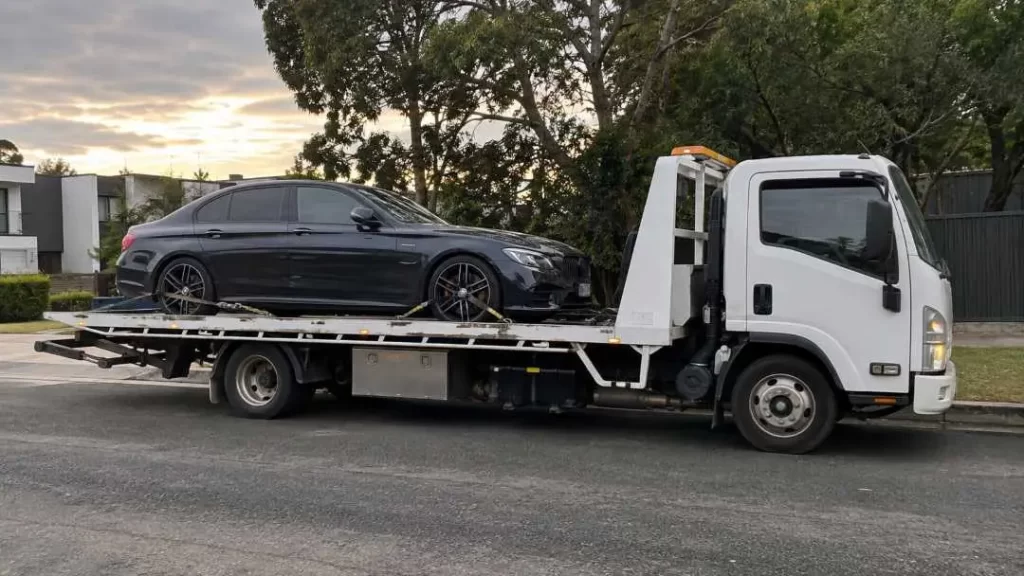
Flat bed transport keeps the entire vehicle supported on the transport platform. This can be useful when wheel movement should be minimised or when controlled loading is important.
It may also suit cars that need direct transport without being part of a multi-vehicle route. The correct setup still depends on the vehicle manufacturer’s transport requirements.
Vehicles That Should Not Roll Long Distances
Certain mechanical or drivetrain conditions may make unnecessary wheel movement unsuitable. Vehicles with transmission concerns, damaged wheels or some electric vehicle systems may need more controlled transport.
Using flat bed towing can keep all four wheels supported during the journey. This can be particularly useful when the vehicle should not remain in contact with the road while being transported.
Flat bed transport may be considered for:
- Vehicles with drivetrain concerns
- Cars with wheel or tyre damage
- Prestige vehicles
- Some electric vehicles
- Vehicles with transmission problems
Vehicle-specific instructions should still be checked where special towing requirements apply. The towing provider should also know about any existing mechanical faults before collection.
Direct Transport Without Multiple Stops
A flat bed tow often provides direct collection and delivery for one vehicle. This can be useful when the car needs to reach a workshop, storage facility or home without being part of a larger transport schedule.
A multi-vehicle carrier may make several stops before reaching the final destination. For urgent or time-sensitive movements, direct transport can therefore be easier to coordinate.
Low Cars Need More Than the Right Truck Size
Low-clearance vehicles require extra attention because the front bumper, side skirts and underbody sit closer to the road. A truck may have enough carrying capacity but still have an unsuitable loading angle.
Ground clearance should be discussed before the tow truck arrives. Photos from the front and side can help the provider understand how low the vehicle sits.
Ramp Angle and Ground Clearance
A steep loading angle can cause spoilers, splitters or exhaust components to come close to the tray or road surface. This is especially common with modified cars and sports vehicles.
The operator may need to adjust the loading angle or use suitable loading aids. Planning this before arrival can reduce the chance of delays during collection.
Choosing Equipment for Low-Clearance Cars
For very low vehicles, lower car towing can provide a more suitable approach than using standard equipment without considering clearance. The towing setup should allow the car to move onto the transport platform as smoothly as possible.
This is particularly relevant for sports cars, lowered sedans and prestige vehicles. Modified suspension or body kits should always be mentioned before booking.
Planned Transport and Urgent Towing Are Different Jobs
A planned vehicle move usually has different priorities from a breakdown or urgent recovery. Car carriers can be convenient when the vehicle is ready for collection and timing is flexible.
Tow trucks are generally more suited to direct collection where the vehicle needs to be moved from its current location without waiting for a multi-stop transport route. The urgency of the job can therefore influence the best option.
Planned Vehicle Relocation
Planned transport may involve a vehicle that is fully operational but needs to be moved without being driven. Dealers, auction buyers and fleet operators often use organised vehicle transport for this reason.
These jobs can be scheduled in advance and may suit a carrier route. Flexible pickup and delivery times can make grouped transport practical.
Unexpected Vehicle Problems
Breakdowns create a different situation because the vehicle may be stopped somewhere inconvenient or unsafe. The owner usually needs it moved directly to a workshop, home or another secure destination.
A tow truck is commonly more practical in these cases because it is designed around direct vehicle collection. The provider can also prepare for a non-running or damaged vehicle before arriving.
Can Both Transport Methods Be Used for One Vehicle?
Some transport jobs may use more than one type of truck. This can happen when the original pickup location is unsuitable for a large carrier but the vehicle still needs long-distance transport.
A smaller towing vehicle may first move the car to a more accessible site. The vehicle can then be transferred to a larger carrier for the next stage.
Local Collection Before Carrier Transport
A local tow truck can collect the vehicle from a basement, narrow street or difficult residential property. It may then transport the car to a depot or open loading area where a carrier has enough space to operate.
This arrangement should be planned in advance so both providers understand the vehicle condition. The handover point should also be confirmed before the first collection begins.
Final Delivery After Carrier Transport
The reverse arrangement can also be used when a carrier brings a vehicle into Sydney. A local tow truck may complete the final delivery if the destination has difficult access.
This is useful for workshops, apartments or private properties where a large transporter cannot enter. Clear communication between the transport providers helps prevent unnecessary waiting.
What Information Should You Give Before Booking?
Accurate vehicle details make it easier for the towing provider to select suitable equipment. You do not need to diagnose the problem, but you should explain anything you already know about the vehicle and location.
Providing complete information can also reduce the risk of the wrong truck being sent. Photos are useful when access or vehicle damage is difficult to describe.
Give the provider:
- Vehicle make and model
- Pickup suburb
- Delivery location
- Whether the engine starts
- Whether the car rolls
- Whether steering works
- Whether the vehicle enters neutral
- Any flat or damaged tyres
- Any accident or suspension damage
- Ground clearance if modified
- Underground parking or access restrictions
This information gives the provider a clearer picture of the job before dispatch. It also helps them estimate how much space and loading equipment may be required.
Which Option Is Better for Different Vehicle Moves?
There is no single transport method that is best for every vehicle. Two cars travelling the same distance may require different trucks because of their condition or collection location.
The best decision comes from considering how the vehicle will be loaded, transported and delivered. Timing and access should be treated as part of the transport job rather than separate issues.
Choose a Car Carrier When
A car carrier can be practical when several vehicles are moving together and the collection site has enough space. It can also suit planned dealer, auction and fleet movements where timing is flexible.
Carrier transport may be suitable when:
- Several vehicles need transport
- Pickup and delivery are planned
- The location has good access
- Vehicles can be loaded normally
- Flexible scheduling is acceptable
These conditions make it easier to organise multiple vehicles on one route. The main limitation is usually access at the pickup and delivery points.
Choose a Tow Truck When
A tow truck is often more useful when one vehicle needs direct collection or cannot move normally. It can also be better suited to workshop deliveries and urgent vehicle recovery.
Tow truck transport may suit situations where:
- One vehicle needs direct transport
- The car does not start
- The vehicle needs winch loading
- Pickup access is restricted
- The vehicle has wheel or steering problems
- The transport is urgent
The provider can recommend a specific towing method once the vehicle condition is explained. This may include a tray, flat bed or another suitable setup.
Questions to Ask Before Choosing Vehicle Transport
Before booking vehicle transport, ask how your car will be collected, loaded and delivered. Price is important, but the truck type, loading method and access at both locations can have a bigger impact on whether the job can be completed smoothly.
Giving the provider accurate information also helps prevent unsuitable equipment from arriving. This is particularly important for non-running cars, vehicles with locked wheels and cars parked in restricted-access locations.
Useful questions include:
- Can the truck safely access the pickup location?
- What loading method will be used for my vehicle?
- Can you transport a car that does not start?
- What equipment is available if the wheels are locked?
- Will the vehicle remain on the same truck for the full journey?
- Is delivery direct or part of a multi-stop transport route?
- Can the equipment accommodate a low-clearance vehicle?
- Do you need photos of the car or pickup area before collection?
- Can you confirm the delivery location before loading?
- Will I receive clear information about the towing arrangement and cost?
It is also worth understanding your NSW towing rights and consumer protections before agreeing to a tow. NSW Government guidance states that motorists can refuse a tow when they believe the tow truck is unsuitable and can request a quotation for the towing work, which makes confirming the truck and service details before collection worthwhile.
Clear communication before dispatch helps the provider choose equipment that suits both the vehicle and the location. It can also reduce delays caused by access restrictions, loading difficulties or missing information at the pickup point.These questions can help identify access or loading problems before the truck is dispatched. They also make it easier to compare transport options properly.
FAQs About Car Carriers and Tow Trucks
Is a Car Carrier the Same as a Tow Truck?
No. A car carrier usually transports several vehicles, while many tow trucks are designed for individual vehicle collection or recovery.
The two can sometimes perform similar transport jobs, but the loading process and scheduling are different. The most suitable option depends on the vehicle and location.
Which Is Better for a Broken-Down Car?
A tow truck is often more practical for a broken-down car because it can provide direct collection. It may also have suitable equipment for loading a non-running vehicle.
The vehicle’s wheel, steering and transmission condition should still be explained before dispatch. This allows the provider to select an appropriate truck.
Can a Car Carrier Pick Up a Car From My House?
It may be possible if the street and property have enough space for the carrier. Large transporters need room to position and load safely.
Narrow streets, trees, low overhead structures and parked vehicles can restrict access. A tow truck may be needed if the carrier cannot reach the property.
Can a Tow Truck Move a Working Car?
Yes. Tow trucks can transport vehicles that are still operational when owners do not want them driven.
They may be used for workshop transfers, planned relocation or careful transport of specialised vehicles. A breakdown is not required before towing can be arranged.
Is a Flat Bed Better for a Prestige Car?
A flat bed can be useful because the vehicle is fully supported during transport. Ground clearance and loading angle still need to be checked before collection.
The vehicle manufacturer’s transport instructions should also be followed where applicable. Prestige vehicles may require additional care during loading and securing.
What If My Car Is Too Low for a Normal Tow Truck?
Tell the towing provider before they send a truck. Low-clearance vehicles may require a different loading angle or specialised setup.
Providing side and front photos can help the operator assess the car. This reduces the chance of unsuitable equipment arriving.