What Happens If You Put the Wrong Fuel in Car in Sydney?
Putting the wrong fuel in car doesn’t feel serious at first. Most people realise it quietly, standing at the pump, hoping it’s not a big deal. In Sydney, where drivers switch between petrol cars, diesel hybrids, rentals, and company vehicles, misfuelling happens every single day. It’s not rare. What is rare is people reacting correctly.
The mistake itself doesn’t destroy engines. What causes damage is panic, denial, and driving when the car should never move again. I’ve seen cars saved because the driver stopped immediately, and I’ve seen engines destroyed because someone thought, “It’ll probably be fine.”
This article explains exactly what happens, why it happens, and what actually determines whether your car survives or not.
How Wrong Fuel in Car Affects Your Vehicle

The moment the wrong fuel enters your tank, your fuel system becomes contaminated. Your car doesn’t know how to “adapt” to the wrong fuel. It isn’t smart in that way. Every component in the system is engineered for one specific fuel type, with exact tolerances, pressures, and lubrication needs.
If the engine has not been started, the wrong fuel is usually sitting in the tank and part of the fuel line. In that situation, the damage is often limited and reversible. Once the engine starts, however, the fuel pump immediately draws that contaminated fuel through the system. From there, it reaches injectors, sensors, and internal engine components where damage can begin almost instantly.
The most important factor isn’t how much wrong fuel you added. It’s whether the fuel was circulated.
Should You Start the Engine or Not?
No. And this is not negotiable.
Starting the engine activates the fuel pump immediately. Modern fuel systems operate under extreme pressure, especially in diesel vehicles. Once the wrong fuel is pressurised and injected, internal wear begins. This happens faster than most drivers expect. In many modern cars, damage can start within seconds.
People often think a brief start won’t matter. That belief is responsible for a huge number of engine failures. If the engine has not been started, the repair process is simple. Once it has, the outcome becomes unpredictable and often expensive.
What to Do Immediately After Putting the Wrong Fuel in Car
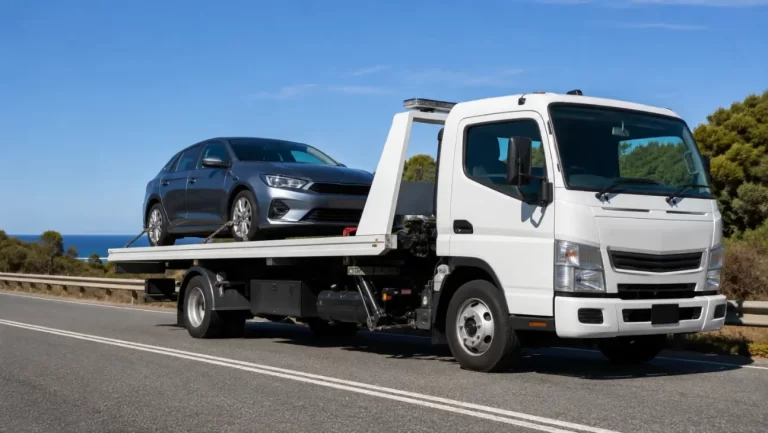
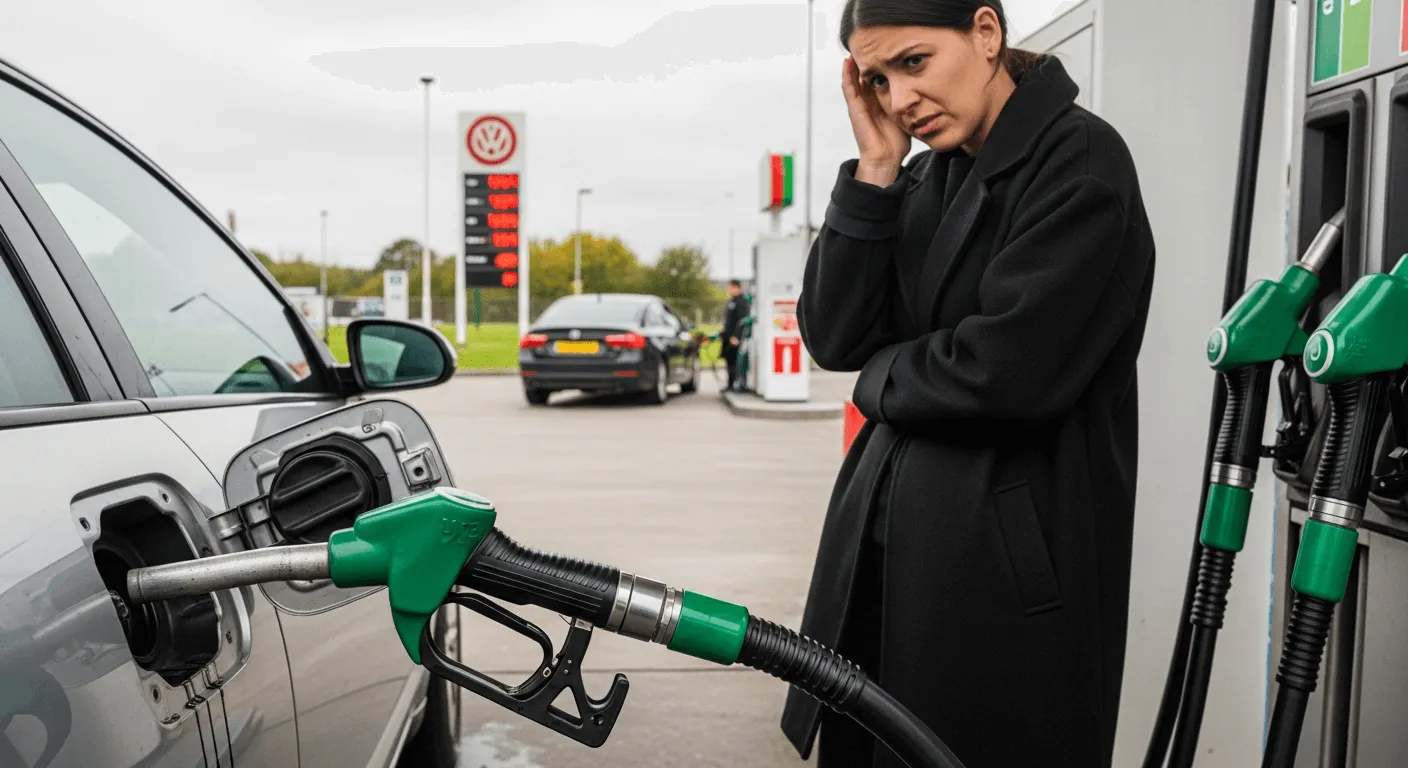
If you realise you’ve put the wrong fuel in car, don’t panic. Acting quickly can prevent serious engine damage and save you from costly repairs. At that moment, nothing mechanical has happened yet. No pressure. No circulation. No damage. Arranging professional towing in Sydney at this stage often means the car can be fixed quickly with minimal cost.
Do Not Start the Engine
If the ignition is still off, leave it that way. This prevents the contaminated fuel from circulating through the fuel lines, injectors, and engine.
If the Engine Is Already Running, Switch It Off Immediately
The faster you stop the engine, the less likely the wrong fuel will spread through the system and cause damage.
Avoid Trying to Drain the Tank Yourself
Modern vehicles have sealed fuel systems and sensitive components. Improper handling can make the problem worse and increase repair costs.
Call Professional Assistance
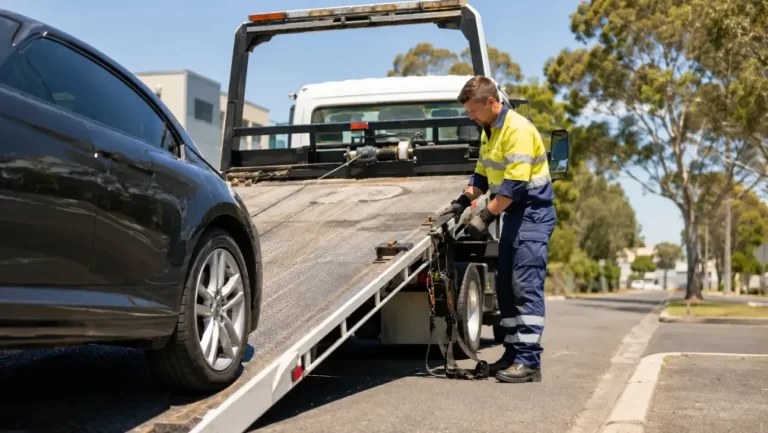
Contact a trusted roadside or towing service, like Nationwide Towing & Transport. Their trained technicians can safely recover your car, drain the tank, and inspect the fuel system to prevent long-term damage.
Petrol in a Diesel Car: What Really Happens
Petrol in a diesel car is the most damaging form of misfuelling. Diesel engines rely on diesel fuel not just for combustion, but for lubrication. Petrol removes that lubrication entirely.
When petrol enters a diesel fuel system, metal components that are designed to glide suddenly grind against each other. The high-pressure fuel pump is usually the first component to fail. When it does, tiny metal particles are released and carried throughout the entire fuel system. Once that contamination spreads, replacing a single part is no longer enough. The entire system often needs replacement.
In Sydney workshops, this scenario regularly leads to repair quotes that exceed the value of older vehicles. This is why petrol in a diesel car is treated as an emergency, not a minor mistake.
Diesel in a Petrol Car: Is It Less Serious?
Diesel in a petrol car is generally less destructive, but that doesn’t mean it’s safe. Diesel does not ignite properly in petrol engines. Instead of burning cleanly, it disrupts the combustion process.
If the engine is not started, the fix is usually straightforward. If the engine is started or driven, diesel can foul spark plugs, block injectors, and damage the catalytic converter. The car may run briefly, then stall suddenly, often in traffic.
Drivers sometimes misinterpret this as a temporary issue. It isn’t. Continuing to drive almost always increases repair costs.
What Happens If You Keep Driving With the Wrong Fuel in Car?
This is where small mistakes turn into catastrophic failures.
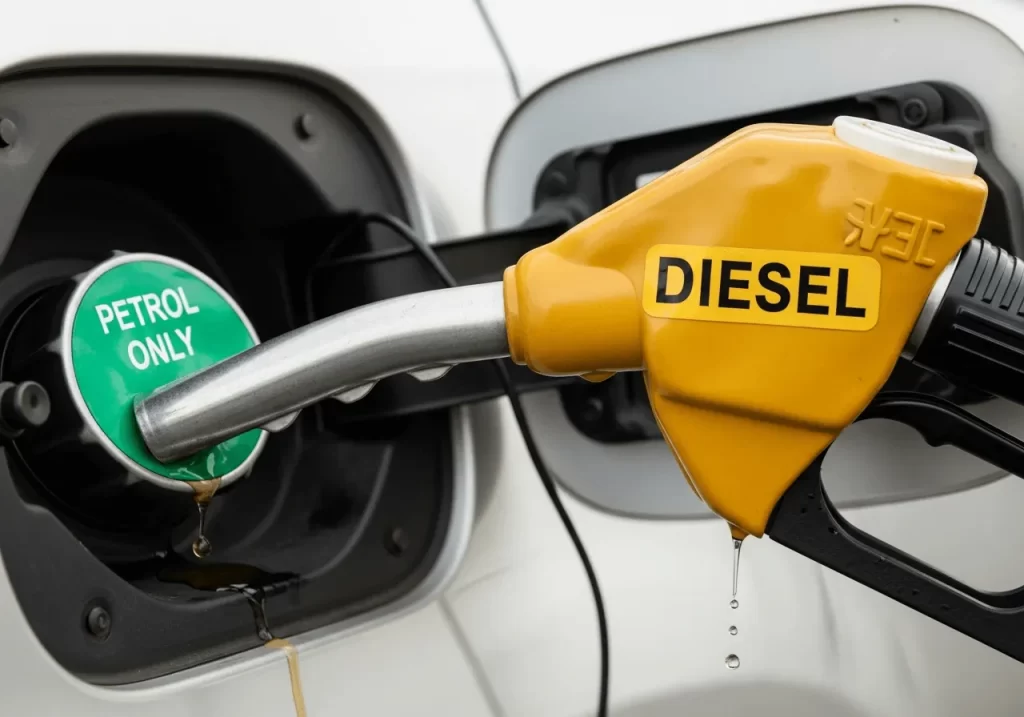
Driving with the wrong fuel in cars forces contaminated fuel through every component in the system. Pumps overheat. Injectors clog. Internal engine parts wear unevenly. Warning lights may appear, or the car may simply lose power and stop without warning.
Many drivers attempt to “burn off” the wrong fuel or dilute it by adding more of the correct type. This does not work. Engines are not filters. They are precision machines. The longer the engine runs, the more damage accumulates.
Almost every severe misfuelling case involves continued driving.
How Much Damage Can Wrong Fuel Cause?
Damage is not random. It follows a clear pattern.
Cars that are never started often suffer little to no permanent damage. Cars that are started briefly may require component cleaning or replacement. Cars that are driven, especially under load or at speed, often suffer widespread fuel system failure. In the worst cases, engines are written off entirely.
The difference between outcomes is rarely distance alone. It is time under pressure.
How Much Does It Cost to Fix Wrong Fuel in Car in Sydney?
In Sydney, costs vary widely depending on when action is taken. Early intervention usually involves towing and fuel drainage, which is relatively affordable. Late intervention often involves injector replacement, pump replacement, or complete fuel system rebuilds.
Insurance is inconsistent. Many policies classify misfuelling as driver error and exclude it. Drivers often discover this only after the damage is done.
The cheapest outcome almost always involves stopping immediately and towing early.
Why Driving After Misfuelling Is Dangerous in Sydney Traffic
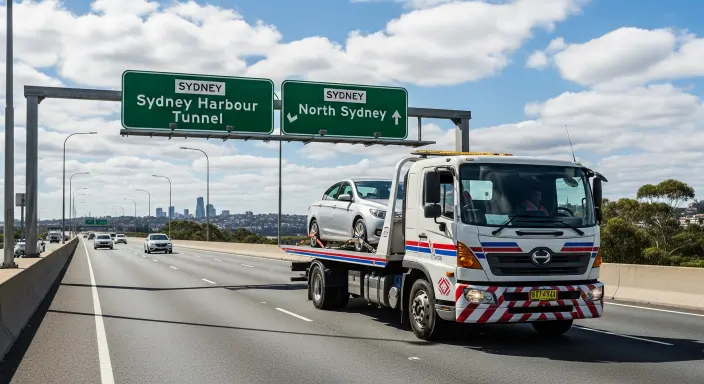
Sydney traffic makes misfuelling more than a mechanical issue. A car that stalls unexpectedly in busy traffic creates serious safety risks. Breakdowns in tunnels, on motorways, or in peak-hour congestion can lead to accidents, fines, and forced removals.
Even if the engine seems to run, the risk of sudden failure is high. Stopping safely on your own terms is always better than breaking down in live traffic.
When Towing Is Safer Than Attempting to Drive
Towing is not an overreaction in misfuelling cases. It is damage control.
If there is any doubt about what fuel went into the car, if the engine has been started, or if warning signs appear, towing prevents further circulation of contaminated fuel. Driving, even briefly, always increases risk.
Why Early Towing Prevents Engine Failure
Early towing stops the problem from spreading. It keeps contamination localised and prevents wear from escalating. Late towing simply transports a vehicle that has already been damaged.
From a mechanical standpoint, towing early preserves options. Using a fuel recovery service in Sydney keeps contamination localised and prevents damage from spreading through the fuel system.
Wrong Fuel in Hybrid and Newer Cars
Modern vehicles are less forgiving than older ones. Higher pressures, tighter tolerances, and complex electronics mean mistakes escalate faster. Hybrids are particularly deceptive because symptoms may not appear immediately. Damage can accumulate quietly until the car suddenly fails.
DIY fixes that might have worked decades ago are risky and expensive mistakes in modern vehicles.
How Common Is Putting the Wrong Fuel in a Car?
It is extremely common. Towing operators and mechanics see it daily. It happens to experienced drivers as often as new ones. Stress, distraction, and routine are the main causes.
There is no shame in it. The only mistake that matters is ignoring it.
How to Avoid Putting the Wrong Fuel in Car Again
Most drivers who misfuel do so because they rush or operate on autopilot. Slowing down, reading the pump label every time, and removing distractions during refuelling are simple habits that prevent costly errors.
Awareness is the best prevention.
FAQs
Can I drive if I only added a small amount of the wrong fuel?
No. Even a small amount can cause damage once the engine starts. Fuel systems don’t dilute safely — circulation is what causes harm.
What if the car feels fine after starting?
Cars can run normally while damage is happening internally. Symptoms are often delayed, especially in modern vehicles.
How quickly should I get help after misfuelling?
Immediately. The sooner you stop, the less damage occurs. Early towing usually saves thousands in repairs.
Do I need a tow truck for wrong fuel?
Yes. Driving increases the risk of fuel system failure. Towing prevents contaminated fuel from spreading.
Is wrong fuel covered by insurance in Sydney?
Sometimes, but many policies exclude driver error. Always check your policy before assuming coverage.
Final Word:
Putting the wrong fuel in car is a momentary mistake.Driving after it is a choice with long-term consequences.
If this happens in Sydney, the smartest move is simple: stop, switch off, and arrange professional towing. That one decision often determines whether your car survives.Early action saves engines.Late action destroys them.