
Electric and Hybrid Vehicles: 7 Things to Know Before Towing
Electric and hybrid vehicles are now a familiar sight on Sydney roads, but recovering them after a breakdown can require more care than moving a conventional petrol or diesel vehicle. If your vehicle cannot be driven safely, a professional towing service can assess its condition and determine how it should be transported.
The question can you tow an electric car does not have one answer for every model. The correct recovery method can depend on the drivetrain, battery system, vehicle condition and the manufacturer’s towing instructions. Understanding these seven important considerations can help you avoid unsuitable recovery methods and protect the vehicle during transport.
Why Electric and Hybrid Vehicles Need Special Towing Consideration
Electric vehicles use high-voltage battery systems and electric drive components, while hybrids combine electric systems with an internal-combustion engine. These differences mean recovery operators need to consider the vehicle’s electrical system as well as its wheels, steering, brakes and drivetrain.
Not every EV or hybrid is designed to be moved in the same way. Some models have specific towing modes or procedures, while others may require the vehicle to be transported with its wheels off the road.
7 Things to Know Before Towing EV
The safest recovery starts with understanding what makes these vehicles different. These seven considerations can help drivers know what information to provide and why professional equipment may be necessary.
1. Check the manufacturer’s towing instructions
The owner’s manual should be one of the first places to check when an electric or hybrid vehicle needs recovery. It may specify whether the vehicle can be towed with its wheels on the ground, whether a particular mode needs to be selected and which wheels must be lifted.
Instructions can vary considerably between models, even when two vehicles use similar electric technology. Never assume that a towing method suitable for one EV will automatically be suitable for another.
2. Identify the vehicle’s drivetrain
An electric vehicle may be front-wheel drive, rear-wheel drive or all-wheel drive. Hybrid vehicles can also use different drivetrain arrangements, and this affects how their wheels are connected to the propulsion system.
Knowing which wheels are driven helps the towing operator determine an appropriate recovery method. When arranging assistance, provide the exact make and model rather than simply saying that the vehicle is electric or hybrid.
3. Do not assume neutral makes towing safe
Selecting neutral does not automatically mean that an EV or hybrid can be pulled for any distance. The way the electric motor, reduction gear and drivetrain are designed can affect whether wheel rotation is acceptable while the vehicle is switched off.
This is particularly important when drivers are considering flat towing. If the manufacturer’s instructions do not approve the method, the vehicle should not be dragged simply because the gear selector shows neutral.
4. Consider the high-voltage battery
Electric and hybrid vehicles contain high-voltage components that should not be handled by untrained drivers. A breakdown does not necessarily mean the battery is damaged, but a collision, flood or significant underbody impact can create additional concerns.
Do not attempt to disconnect, inspect or repair high-voltage cables or battery components yourself. If you notice smoke, unusual heat, strong odours or visible battery damage, move away from the vehicle when safe and contact emergency services if there is an immediate hazard.
5. Choose equipment suited to the vehicle
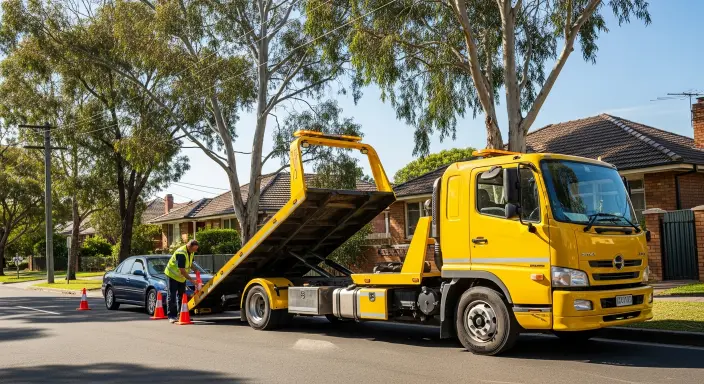
The recovery equipment should be selected according to the vehicle’s design and condition. In some circumstances, a flatbed or tilt tray can allow the vehicle to be transported without relying on its driven wheels to rotate on the road.
A vehicle that has damaged wheels, steering or suspension may require additional recovery equipment. Tilt tray towing can be useful for certain disabled vehicles, but the operator should still assess the vehicle before loading it.
6. Tell the operator exactly what happened
The reason for the breakdown can be just as important as the vehicle type. Running out of charge, losing 12-volt power, suffering a collision or being exposed to floodwater can each create different recovery considerations.
When requesting assistance, explain whether:
- The vehicle starts or powers on
- The traction battery is depleted
- The 12-volt battery is flat
- The vehicle can select neutral
- The wheels are locked
- There has been an accident
- There is visible underbody damage
- The vehicle has been exposed to water
- Warning messages are displayed
This information can help the recovery operator prepare appropriate equipment.
7. Consider where the vehicle is located
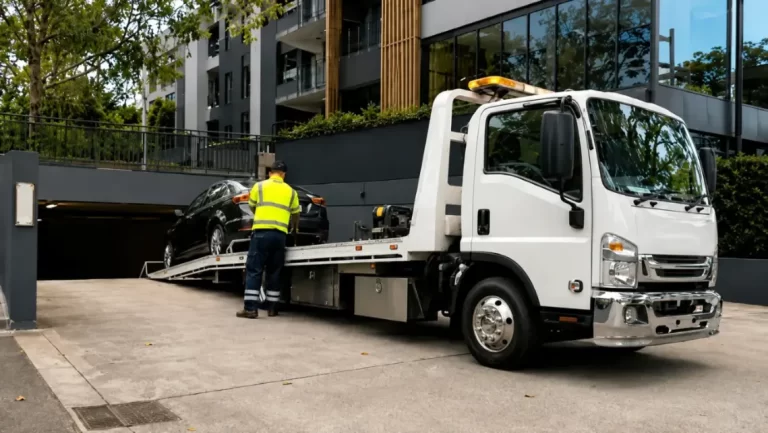
The recovery location can affect the equipment and loading process. An EV in a normal roadside position may be easier to recover than one inside an underground car park, narrow driveway or restricted-access area.
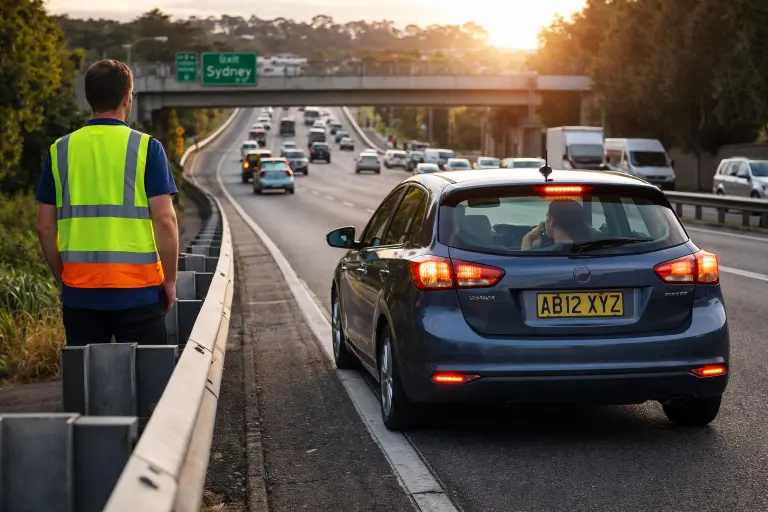
If the vehicle cannot move under its own power, explain the access conditions when booking assistance. Professional emergency towing can help when a disabled vehicle needs to be removed from a potentially unsafe roadside position, subject to the vehicle and recovery circumstances.
Can You Tow an Electric Car?
Yes, an electric car can be recovered, but the method depends on the individual vehicle. So, can you tow an electric car with all four wheels on the ground? That depends on whether the manufacturer permits that method for the specific model.
Some EVs may have procedures that allow limited movement, while others require the vehicle to be loaded onto suitable recovery equipment. The safest approach is to follow the manufacturer’s instructions rather than relying on assumptions about electric vehicles generally.
What if the EV cannot move?
If the vehicle cannot select neutral, has locked wheels or has suffered drivetrain damage, forcing it to move can create additional problems. A recovery operator can assess whether the car needs to be lifted, winched or loaded using specialised equipment.
If the vehicle simply has a flat 12-volt battery, the situation may be different again. Some electric vehicles rely on their low-voltage system for electronic controls, so the car may appear completely unresponsive even though energy remains in the main battery.
Can Electric and Hybrid Vehicles Be Flat Towed?
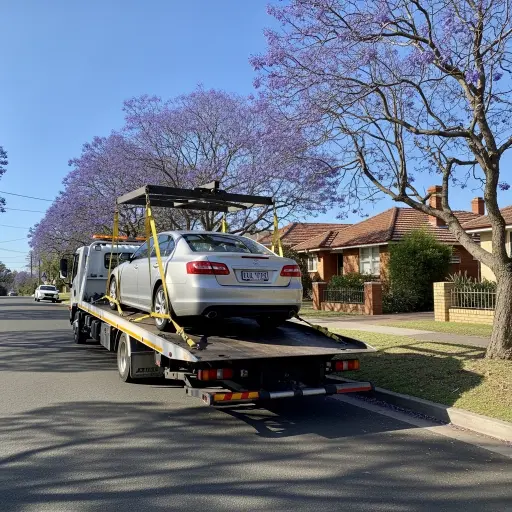
Flat towing means all four wheels remain on the road while another vehicle pulls the disabled vehicle. Whether this is allowed depends on the specific vehicle and its manufacturer’s instructions.
Some vehicles are designed for particular towing arrangements, while others should not be moved with their driven wheels rotating. The safest approach is to confirm the permitted method before recovery begins.
Why drivetrain configuration matters
With a conventional vehicle, drivers may already be familiar with front-wheel-drive or rear-wheel-drive towing considerations. EVs add another layer because electric motors can be directly integrated into the drive system.
An all-wheel-drive EV can require even more careful consideration because multiple wheels may be connected to the electric drive system. This is one reason a professional recovery operator should assess the vehicle rather than treating every EV in the same way.
When a flatbed can help
A flatbed recovery vehicle can transport the car with its wheels off the road. This can be useful where the manufacturer’s instructions do not permit certain wheels to rotate during towing.
However, loading still needs to be carried out correctly. The operator should consider the vehicle’s ground clearance, wheel condition, parking brake, steering and access to the recovery vehicle.
What Happens When an Electric Car Runs Out of Charge?
An EV that has reached zero usable charge may not be able to drive to a charging station. Depending on the vehicle and circumstances, roadside assistance may assess whether the issue involves the main traction battery or the separate 12-volt electrical system.
Drivers should avoid attempting improvised towing to reach a charger. If the vehicle cannot safely move, it may need to be transported to an appropriate charging location or another suitable destination.
A depleted traction battery is not the same as a flat 12-volt battery
Electric vehicles generally use a high-voltage traction battery to power the electric drivetrain and a lower-voltage electrical system for various vehicle functions. A problem with either system can prevent normal operation.
Tell the recovery provider which warning lights or messages appeared before the vehicle stopped. This can help distinguish between a charging issue and another electrical or mechanical problem.
What If an Electric Vehicle Is Involved in an Accident?
Accident damage can change the recovery process significantly. Damage underneath the vehicle can be difficult to identify visually, and the high-voltage battery may be located within the vehicle’s lower structure.
Do not crawl underneath a damaged EV to inspect the battery yourself. Instead, explain the location and severity of the collision to the recovery operator and mention any visible warning signs.
Signs that need extra caution
Drivers should take additional care if they notice:
- Smoke or unusual vapour
- Excessive heat
- Burning or chemical smells
- Visible damage underneath the vehicle
- Battery casing damage
- Fluid leakage
- Damaged charging equipment
- Electrical warning messages
AFAC’s Australian EV response guidance specifically identifies high-voltage battery hazards and provides information intended to support emergency responders and vehicle recovery personnel dealing with EV incidents. (AFAC)
Flood-damaged EVs
Water exposure can create additional safety concerns for vehicles containing high-voltage electrical systems. If an EV or hybrid has been driven through significant floodwater or has been submerged, tell the recovery provider before attempting to move it.
Do not assume that a vehicle is safe simply because it starts after water exposure. A professional assessment may be appropriate before normal driving resumes.
How Hybrid Vehicles Differ From Fully Electric Cars
Hybrid vehicles combine an internal-combustion engine with an electric motor and battery system. Plug-in hybrids can have larger battery systems because they can also be charged externally.
This means a hybrid should not automatically be treated like either a conventional petrol car or a fully electric vehicle. The exact recovery procedure depends on its particular design.
| Vehicle type | Main consideration | Recovery approach |
|---|---|---|
| Fully electric | High-voltage battery and electric drivetrain | Follow model-specific towing instructions |
| Hybrid | Engine, electric motor and battery | Check manufacturer requirements |
| Plug-in hybrid | Larger rechargeable battery plus engine | Confirm approved recovery method |
| Accident-damaged EV | Possible battery/underbody damage | Assess condition before movement |
| Out-of-charge EV | Depleted traction or 12V battery | Determine whether charging or towing is required |
How to Prepare an EV or Hybrid for Towing
A little preparation can make recovery more straightforward. Before assistance arrives, keep the vehicle’s keys available and provide the operator with the make, model and reason for the breakdown.
Also explain whether the vehicle is in a difficult position, such as a basement car park or narrow driveway. Accurate information can help the operator understand what equipment may be required.
If the vehicle can be safely accessed, remove personal belongings and secure loose items before transport. Do not attempt repairs or interfere with high-voltage components simply to prepare the vehicle for towing.
Choosing a Safe Recovery Method
There is no universal towing method for all electric and hybrid vehicles. The vehicle’s drivetrain, manufacturer instructions, condition and recovery location should all be considered before it is moved.
For a vehicle that cannot be driven, car towing can provide a practical recovery option when the appropriate equipment is selected. A flatbed, tilt tray or another method may be considered depending on the vehicle and its specific circumstances.
The key is to avoid treating electric and hybrid vehicles as identical. A professional assessment can help reduce the chance of using an unsuitable towing method.
Frequently Asked Questions
Can you tow an electric car?
Yes, but the approved method depends on the specific vehicle. Can you tow an electric car with its wheels on the ground should be confirmed using the manufacturer’s towing instructions.
Can you flat tow an electric vehicle?
Some vehicles may permit specific forms of flat towing, while others do not. Always check the vehicle’s manual before allowing its wheels to rotate during recovery.
Can you tow an electric car with a flat battery?
Yes, an electric car with a depleted battery can be recovered, but the appropriate method depends on the vehicle. A flat traction battery and a flat 12-volt battery can also create different recovery situations.
Are hybrid vehicles towed differently?
They can be. Hybrid systems vary between models, so the recovery procedure should be based on the manufacturer’s instructions and the vehicle’s actual condition.
Is a flatbed suitable for an electric car?
A flatbed may be suitable for many EV recovery situations because it can transport the vehicle with its wheels off the road. The vehicle should still be loaded and secured according to its specific requirements.
What should I do if my EV is damaged after an accident?
Do not inspect or handle high-voltage components yourself. Move away from the vehicle if there is an immediate hazard and provide the recovery operator with details about the collision and any visible damage.