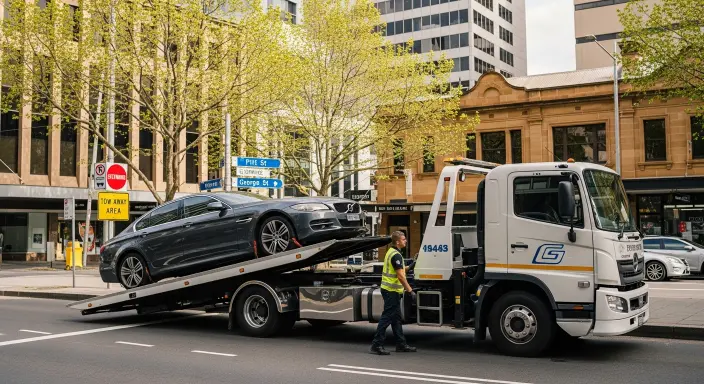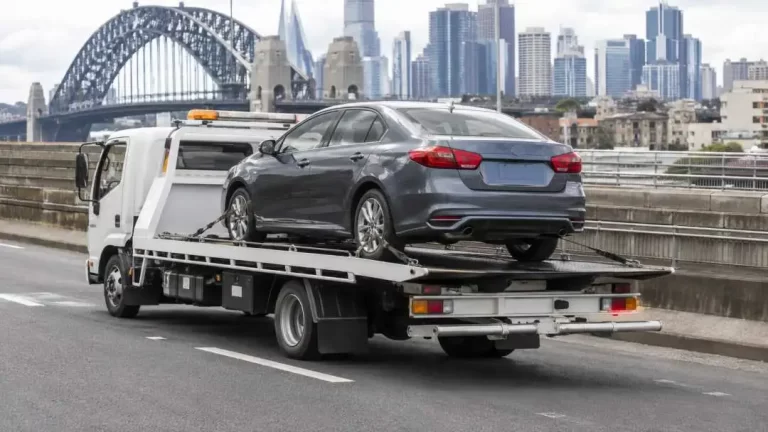
Expert Tips for Staying Safe While Waiting for a Tow Truck
Staying safe while waiting for a tow truck should be your first priority after any vehicle breakdown in Sydney. Many drivers focus on the car. That is a mistake. Your safety comes first.
Roads like the M4 Motorway, Pacific Highway, and Princes Highway carry fast-moving traffic all day. Even suburban roads can be risky during peak hours.When a vehicle suddenly stops, other drivers may not react in time
Secondary crashes are common. That is why staying safe while waiting for a tow truck requires calm decisions, proper positioning, and understanding NSW road rules. This guide explains exactly what to do step by step.
Why Staying Safe While Waiting for a Tow Truck Matters?
A stalled car becomes an unexpected obstacle. Other drivers are not prepared for it. Many roadside injuries happen not because of the breakdown, but because of unsafe behaviour afterward. Staying safe while waiting for a tow truck reduces the chance of being hit, fined, or placed in danger.
In Sydney traffic conditions, especially during morning and evening peak hours, vehicles change lanes quickly. Trucks and buses require longer stopping distances. You cannot assume other drivers will see you in time.
1. The Most Common Roadside Dangers Drivers Face
Rear-end collisions are the biggest risk. A distracted driver looking at their phone may not notice your hazard lights until too late. Wet roads increase stopping distance. At night, visibility drops sharply.
Another common danger is standing too close to the vehicle. If your car is struck from behind, it can lurch forward suddenly. That is why staying safe while waiting for a tow truck means maintaining distance from traffic and from your own vehicle.
2. Why Motorways and High-Speed Roads Increase Risk in Sydney?
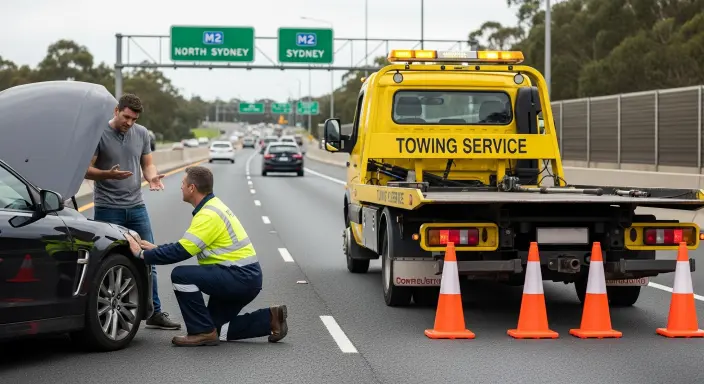
On motorways like the M4, vehicles travel 90–110 km/h. Reaction time is short. Even if drivers see your hazard lights, they may not be able to slow down quickly enough.
Heavy vehicles create wind force as they pass. This can destabilise someone standing on the shoulder. That is why motorway breakdowns require stronger safety positioning than local streets.
3. What NSW Law Requires After a Breakdown or Minor Accident?
According to Transport for NSW, drivers must move their vehicle off the roadway if it is safe and possible. If your vehicle is driveable, you cannot simply leave it blocking traffic.
If injuries occur or a vehicle cannot be moved safely, contact NSW Police Force immediately by calling 000. Failure to follow these rules may result in fines or penalties.
Immediate Steps to Take After Your Vehicle Breaks Down
The first 60 seconds determine your safety outcome. Panic leads to mistakes. Staying safe while waiting for a tow truck starts with simple, controlled actions.
| Step | Action | Why It Protects You |
| Step 1 | Turn on hazard lights | Alerts drivers instantly |
| Step 2 | Gradually move left | Creates distance from traffic |
| Step 3 | Engage handbrake | Prevents rolling |
| Step 4 | Assess surroundings | Decide safest position |
| Step 5 | Call tow service | Reduce waiting uncertainty |
1. Move to a Safe Location (If Possible)
Signal early and avoid sudden braking. Gradually steer toward the left shoulder or breakdown lane. Even moving a few extra metres can create a safer buffer between you and live traffic.
If your engine loses power completely, focus on steering control and hazard activation. Your goal is visibility and separation.
2. Turn On Hazard Lights Immediately
Hazard lights should be activated the moment you realise something is wrong. This early warning gives drivers behind you extra reaction time. In heavy Sydney traffic, even one extra second matters.
3. Position Your Wheels and Engage the Handbrake
Turn your wheels away from traffic. If your vehicle is struck from behind, this positioning reduces the chance of it rolling into active lanes. Always engage the handbrake fully before exiting.
4. Decide Whether to Stay Inside or Exit the Vehicle
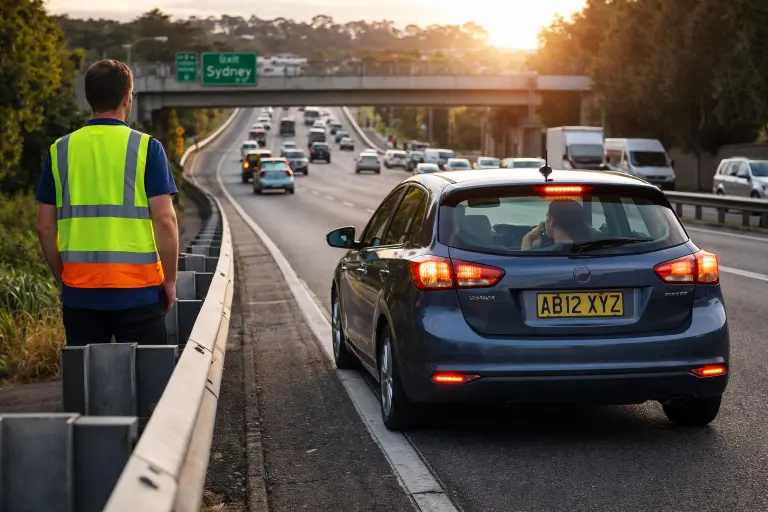
This decision depends on road type. On suburban streets with low speeds, staying inside with your seatbelt on may be safest. On high-speed roads, exiting via the passenger side and standing behind a barrier is often safer.
Never exit on the traffic side unless absolutely necessary.
How to Stay Safe on a Motorway or Busy Sydney Road?
Motorway breakdowns require strict safety discipline. Staying safe while waiting for a tow truck on high-speed roads means distance, elevation, and visibility.
What to Do If You Break Down on the M4 or Pacific Highway
Turn on hazards immediately. Pull as far left as possible. Exit through the passenger side. Move behind a guardrail or up an embankment. Do not remain beside your car.
Motorway shoulders are not safe zones. They are emergency buffers only.
When to Exit the Vehicle on a High-Speed Road
If traffic is moving quickly and there is a safe escape path, exit and move away. If traffic is slow or stationary and no safe barrier exists, remaining inside with seatbelt fastened may reduce injury risk.
Evaluate surroundings before acting.
Where to Stand Safely Away from Traffic
Stand well behind barriers or at least several metres away from the vehicle. Never stand downhill from your car. Avoid standing between your car and traffic.
When to Call Instead of Waiting
Call emergency services immediately if:
- Your vehicle is stuck in a live lane
- Someone is injured
- There is smoke or fire
- Traffic cannot move around you safely
Police may assist with traffic control to prevent further incidents.
Safety Tips While Waiting for a Tow Truck
Staying safe while waiting for a tow truck also means managing the waiting period properly. In Sydney, response times vary from 30 to 90 minutes depending on traffic and demand.
1. Keep Doors Locked and Windows Slightly Open
Keep doors locked to prevent unwanted contact. Slightly open windows for airflow if needed. Avoid opening doors unnecessarily on the traffic side.
2.Use Warning Triangles or Cones (If Safe to Do So)
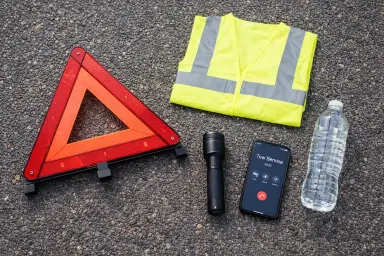
If traffic conditions allow, place reflective triangles 20–30 metres behind your vehicle. Do not risk your safety to set them up on busy motorways.
3. Stay Visible at Night or in Bad Weather
Wear a high-visibility vest if exiting the vehicle. Rain and fog reduce reaction time for drivers. Keep your interior dome light on at night if safe.
4. Protect Yourself From Heat or Cold Exposure
Sydney summers can cause dehydration quickly. If waiting outside, seek shade and drink water. In winter nights, remain inside if cold exposure is a concern.
5. Keep Your Phone Charged and Location Shared
Share your live location with a trusted contact. Keep your phone charged above 20%. Confirm the estimated arrival time with your tow operator.
What NOT to Do While Waiting for Roadside Assistance?
Many injuries happen because of small mistakes. Staying safe while waiting for a tow truck is not only about what you should do — it is also about what you must avoid. Poor decisions increase danger quickly, especially on busy Sydney roads.
1. Don’t Stand Behind or In Front of Your Vehicle
This is the most common mistake. If another driver rear-ends your car, the impact can push it forward suddenly. Anyone standing behind it is at serious risk.
Always stand well away from the vehicle, preferably behind a barrier or several metres off the shoulder.
2. Don’t Accept Unverified Tow Trucks
In busy areas, especially after accidents, unsolicited tow operators may approach you. Only accept the tow service you personally contacted.
Ask for the company name, driver identification, and confirmation details. It also protects you from financial scams.
3. Don’t Leave Children or Pets Unattended
Even mild Sydney temperatures can rise quickly inside a vehicle. Heat stress can happen faster than most people expect.
Keep passengers supervised at all times.
4. Don’t Attempt Risky DIY Repairs on Busy Roads
Changing a tyre on a quiet suburban street may be manageable. Doing it on a motorway shoulder is extremely dangerous.
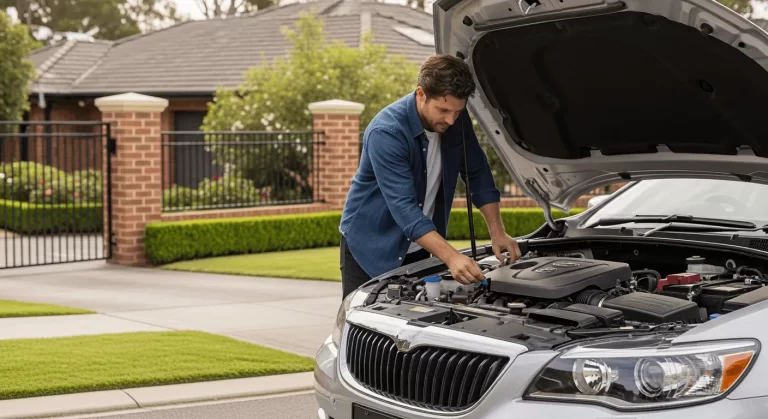
If traffic is heavy or space is limited, call a professional instead of attempting repairs yourself.
Special Situations That Require Extra Caution
Every breakdown is different. Staying safe while waiting for a tow truck means adjusting your actions based on conditions.
Breaking Down at Night in Sydney
Visibility drops sharply after sunset. Other drivers may not see your vehicle until they are close.
Keep hazard lights on. If safe, turn on interior lighting. Wear reflective clothing if you exit. Avoid standing in dark areas close to traffic.
Breaking Down During Heavy Rain or Storms
Wet roads double stopping distance. Drivers may struggle with visibility due to spray.
Move further away from traffic than you normally would. Avoid standing on slippery surfaces. Rain increases secondary collision risk significantly.
Breaking Down in Remote or Coastal Areas
In outer Sydney regions or coastal highways, mobile reception may drop.
Stay with your vehicle unless it is unsafe. Your vehicle is easier for emergency services to locate than a person walking along the roadside.
Waiting Alone as a Solo Driver
If you are alone, keep doors locked and avoid sharing personal information with strangers.
Trust your instincts. If something feels wrong, contact police immediately.
When to Call Police or Emergency Services in NSW
Some breakdowns escalate into emergencies. Staying safe while waiting for a tow truck sometimes requires official assistance.
Accidents Involving Injury
If anyone is injured, call 000 immediately. Do not delay while waiting for towing.
Vehicle Blocking Traffic
If your vehicle cannot be moved and is obstructing a live lane, police can assist with traffic control to reduce risk.
Suspicious or Unsafe Situations
If you feel threatened or unsafe while waiting, contact authorities. Your personal safety is more important than the vehicle.
How Long Does a Tow Truck Take in Sydney?
Many drivers become anxious during waiting periods. Knowing realistic timelines helps you stay calm while staying safe while waiting for a tow truck.
In Sydney, standard response time is 30–60 minutes. During peak congestion, severe weather, or multiple accidents, it may extend to 90 minutes.
Factors That Affect Arrival Time
- Traffic congestion
- Distance from depot
- Weather conditions
- Simultaneous road incidents
- Time of day
Understanding these factors prevents panic decisions.
How to Track or Confirm Your Tow Service?
Always request an estimated arrival time. Confirm driver name and vehicle details. Keep communication open until arrival.
Preparing for the Tow Truck’s Arrival
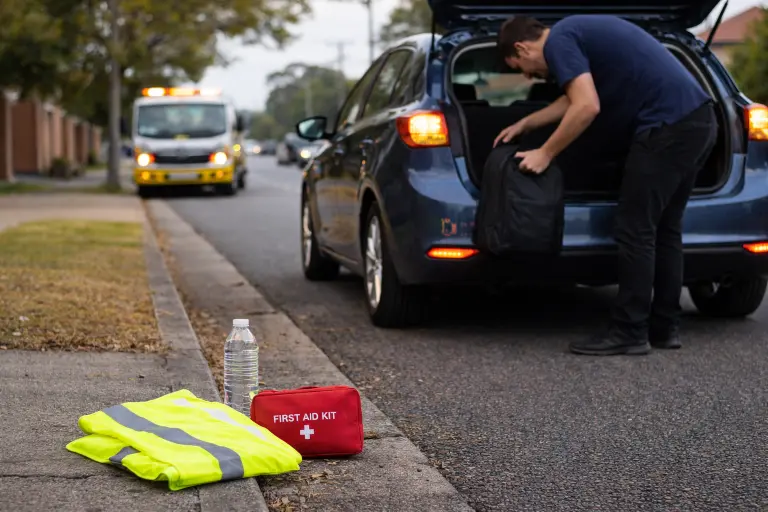
Preparation reduces confusion and speeds up the recovery process. Staying safe while waiting for a tow truck also means being organised before help arrives.
1. Gather Important Documents
Keep your driver’s licence, registration, and insurance details accessible. This prevents delays when the tow operator arrives.
2. Remove Valuables From the Vehicle
Take wallets, electronics, work equipment, and personal documents. Once the vehicle is loaded, access may be limited.
3. Confirm Destination and Payment Details
Clarify the drop-off location before loading begins. Confirm pricing structure and payment method to avoid misunderstandings.
4. Ask the Tow Operator Safety Questions
Professional operators should have proper licensing and insurance. Ask politely if unsure. Transparency builds trust.
Sydney-Specific Roadside Safety Considerations
Local traffic patterns influence how you should respond during a breakdown.
1. High-Risk Roads and Congested Areas
Major motorways and arterial roads carry constant traffic flow. Shoulder space may be limited. Extra caution is required in these areas.
2. NSW Breakdown and Accident Reporting Rules
Drivers must move vehicles off the roadway if safe. If not possible, hazard lights must remain active until assistance arrives.
3. Fines and Legal Responsibilities for Obstructing Traffic
Leaving a driveable vehicle blocking traffic can lead to penalties. Understanding these rules helps you avoid unnecessary fines while staying safe.
Emergency Checklist: Staying Safe While Waiting for a Tow Truck
Before help arrives, pause and reassess your situation. Staying safe while waiting for a tow truck is about constant awareness.
1. Quick 60-Second Safety Review
- Hazard lights active
- Vehicle positioned left
- Handbrake engaged
- Safe distance from traffic
- Tow service confirmed
2. What to Double-Check Before Help Arrives
- Phone battery sufficient
- Location shared
- Valuables secured
- Passengers accounted for
- Traffic conditions monitored
Frequently Asked Questions
Q1: Should I stay inside my car while waiting for a tow truck?
Yes on low-speed roads. Exit only if high-speed risk exists.
Q2: Is it safer to exit the vehicle on a motorway in Sydney?
Yes, if you can safely move behind a barrier.
Q3: How long does a tow truck usually take in Sydney?
Typically 30–60 minutes.
Q4: What should I do if my car breaks down in the right lane?
Turn hazards on and call 000 immediately.
Q5: Can I refuse a tow truck if I didn’t call them?
Yes. Always verify provider.
Q6: What if someone approaches my car while I’m waiting?
Keep doors locked and contact police if concerned.
Q7: Do I need to report a breakdown to NSW Police?
Only if injury or traffic obstruction exists.
Q8: Should I try to fix the car myself or wait for a professional?
Avoid DIY repairs on busy roads.
Conclusion
Staying safe while waiting for a tow truck is about calm thinking, smart positioning, and avoiding unnecessary risks. Most roadside injuries happen after the vehicle stops not because of mechanical failure itself.
If your car breaks down in Sydney, focus on visibility, distance, and communication. Do not rush. Do not panic. Prioritise your safety over the vehicle. If you are stranded and unsure what to do, contact a licensed 24/7 towing professional immediately. Quick action reduces risk and shortens exposure to traffic danger.
Your car can be repaired. Your safety cannot be replaced.