When to Call a Tow Truck in Sydney – Safety, Costs & Warning Signs
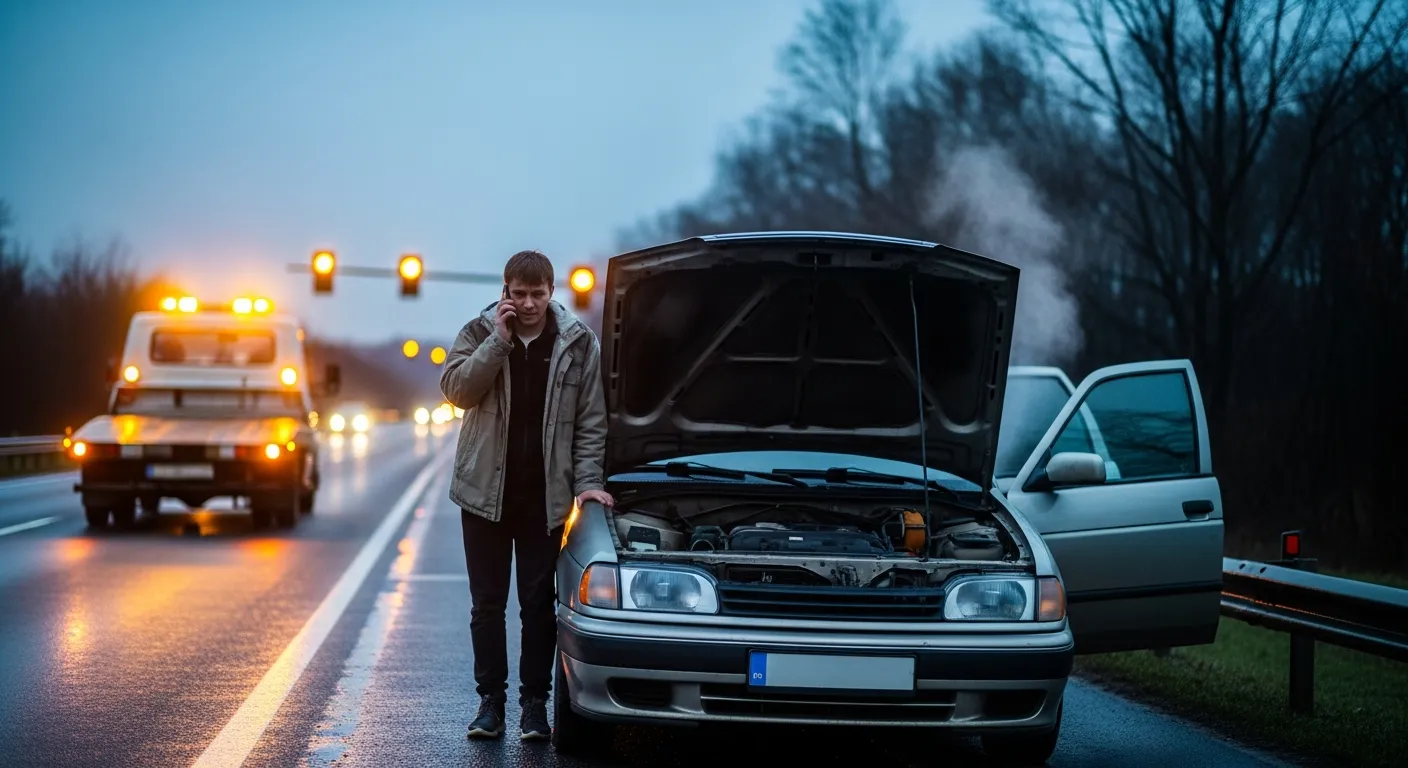
There’s a moment every Sydney driver dreads. Your car makes a sound it’s never made before. A warning light flashes. Traffic is building behind you. You ask yourself one question:
“Do I really need to call a tow truck… or can I just get home?”
I’ve seen this decision cost people nothing — and I’ve seen it cost thousands.
The difference isn’t luck. It’s knowing when driving is safe and when it’s a mistake.
This guide isn’t theory. It’s based on real breakdown scenarios, common driver errors, Sydney traffic realities, and what actually happens when people “just try to make it”.
If you’re unsure right now, this article will give you clarity fast.
When should you call a tow truck instead of driving?
Call a tow truck the moment driving risks safety, legal trouble, or further damage.
That sounds obvious. In reality, most drivers delay because the car still moves. That’s the trap.
Here’s the rule professionals use:
👉 If the problem affects steering, braking, engine temperature, or stability — don’t drive.
Risks of Driving a Damaged Vehicle in Sydney
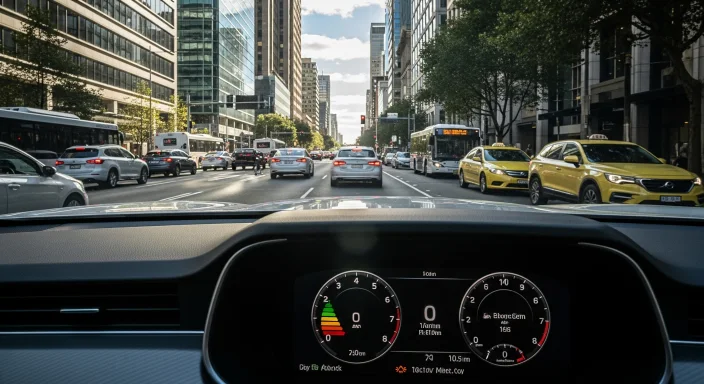
Sydney traffic makes “maybe safe” situations dangerous.
Narrow lanes. Aggressive lane changes. Stop-start congestion. Motorways with limited shoulders.
What might be manageable on a quiet suburban street becomes risky on:
- Parramatta Road
- M4
- M5
- Pacific Highway
- Sydney CBD streets
I’ve watched drivers try to limp cars through traffic with hazards on, hoping for the best. Best case? They stall and block a lane. Worst case? They cause an accident and become legally liable.
If your car:
- Hesitates when accelerating
- Feels unstable
- Struggles uphill
- Smells hot or burnt
Sydney traffic will expose that weakness fast.
What warning signs mean you must stop driving immediately?
These are non-negotiable stop signs. Driving further almost always makes things worse.
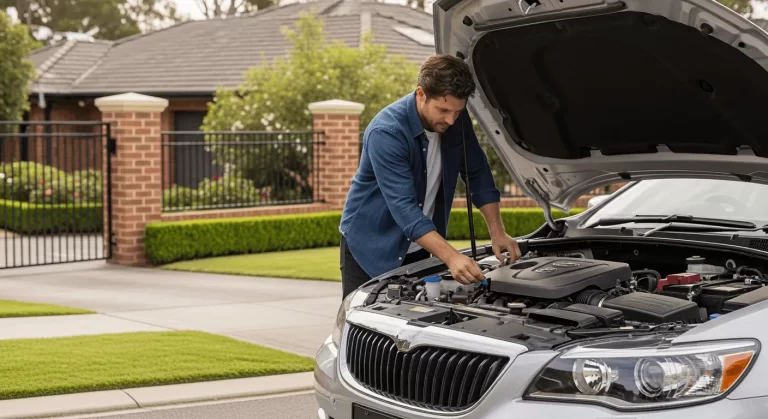
1. Engine overheating
Why it’s critical:
Engines operate within a specific temperature range. Overheating can warp engine components, blow gaskets, and severely reduce lifespan.
Symptoms to watch for:
- Temperature gauge rising toward red
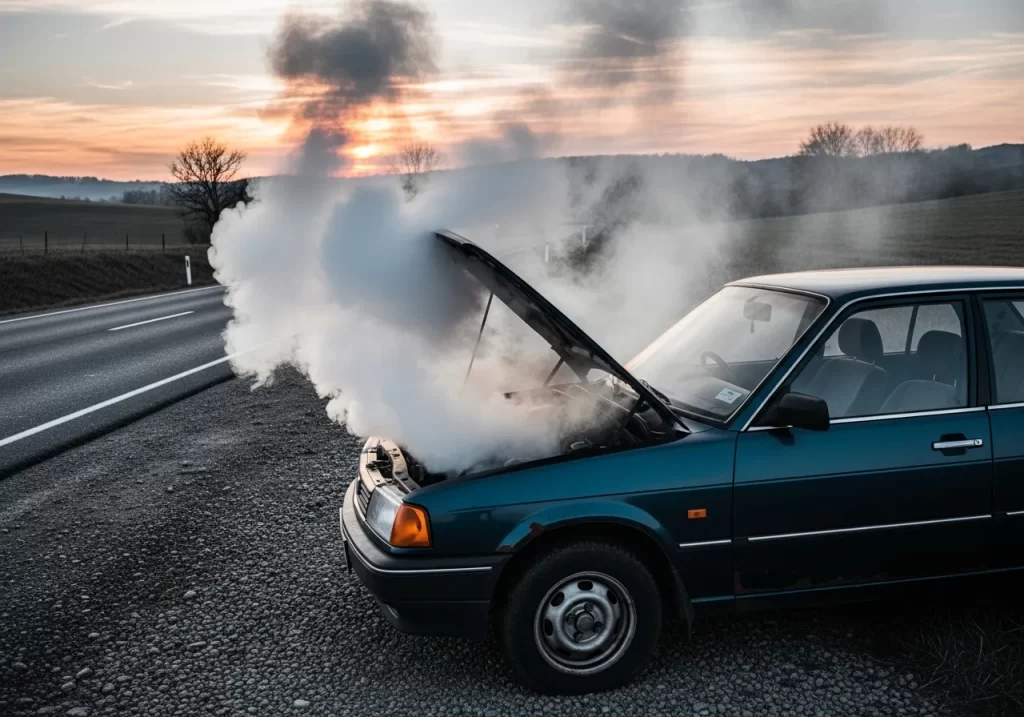
- Steam or smoke from the bonnet
- Unusual coolant loss
- Strong burning smells
Immediate action:
- Pull over safely
- Turn off the engine
- Wait for it to cool
- Call a tow truck
Pro tip:
Do not remove the radiator cap while the engine is hot. If possible, refill coolant only after it has fully cooled.
2. Grinding, knocking, or metal-on-metal noises
Why it’s critical:
These noises usually indicate serious mechanical issues. Continuing to drive can lead to complete failure of components like the transmission, driveshaft, or engine bearings.
Symptoms to watch for:
- Loud knocking or clanking sounds
- Metal scraping or grinding noises during acceleration or braking
Immediate action:
- Stop driving immediately
- Avoid attempting to drive to a mechanic
- Call for towing for safe transport
Pro tip:
Never assume noises are minor — these are usually signs that damage is occurring right now.
3. Brake Failure or Brake Warning Lights
Why it’s critical:
Brakes are essential for safety. Any reduction in braking performance can lead to accidents.
Symptoms to watch for:
- Soft or spongy brake pedal
- Grinding or squealing noises while braking
- ABS or brake warning lights
- Brake fluid warning light
Immediate action:
- Gradually reduce speed
- Pull over safely
- Call tow truck or roadside assistance
- Engage hazard lights to alert other drivers
Pro tip:
Even minor braking irregularities should be treated seriously — never “test” brakes in traffic.
4. Loss of Power or Stalling
Why it’s critical:
Engine stalling can compromise steering and power-assisted brakes, especially dangerous in busy traffic or on highways.
Symptoms to watch for:
- Engine hesitates or cuts out during acceleration
- Car struggles on inclines or uneven terrain
- Dashboard warning lights flash
Immediate action:
- Pull over to a safe location
- Do not attempt to continue driving
- Call a tow truck
Pro tip:
Vehicles may enter “limp mode” to protect the engine — this is a warning, not a solution.
5.Smoke or Burning Smells
Why it’s critical:
Smoke or unusual odors often indicate electrical or mechanical failures that can escalate quickly.
Symptoms to watch for:
- Smoke from under the bonnet
- Burning rubber, plastic, or oil smells
- Sparks or unusual electrical noises
Immediate action:
- Pull over immediately
- Evacuate passengers if necessary
- Call emergency services and a tow truck
Pro tip:
Do not attempt to use water on electrical fires — wait for professionals if a fire is suspected.
Driving a broken car cause expensive damage?
Yes. Almost always.
This is where people get it wrong. They compare tow cost to zero instead of comparing it to future repair costs.
Here’s what driving can multiply:
- Transmission damage
- Engine internals
- Wheel hubs and suspension
- Electrical systems
Driving saved nothing.
Breaks down on a Sydney motorway
Motorways are a different game.If your car stops:
- You must move it off the roadway if possible
- You cannot leave it unattended in a live lane
- You may be fined if it causes obstruction
- Police or RMS may order a tow immediately
If your car is immobile on:
- M4
- M5
- M7
- Lane Cove Tunnel
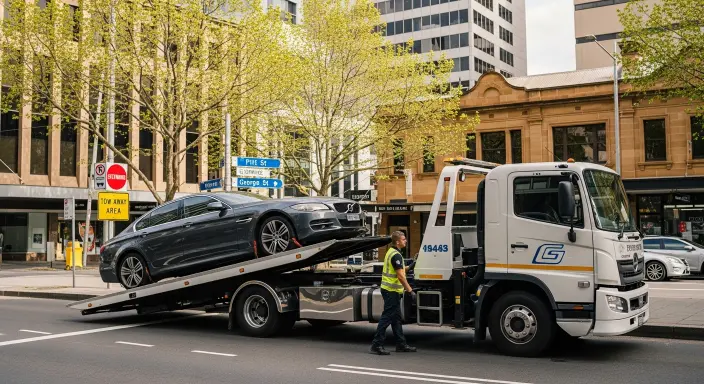
You don’t get to “wait and see”. A tow truck is the fastest and safest option.
And yes — delays here often cost more than the tow itself.
Call a tow truck after an accident
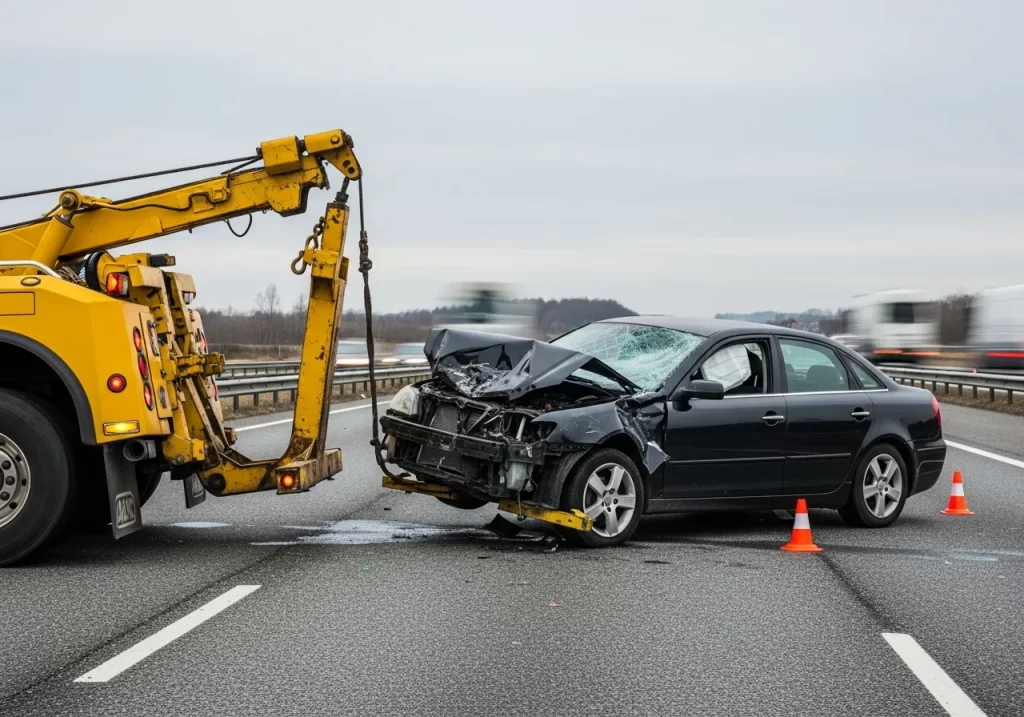
After an accident, damage isn’t always visible. Alignment, suspension, steering racks, and sensors can be compromised even if the car drives.
Driving after an accident can:
- Void insurance claims
- Increase damage
- Put you at fault if another issue occurs
If airbags deployed, fluids are leaking, or the steering feels different — stop driving.
Insurance companies prefer towing after accidents. So should you.
Flat tyre require towing
Not every flat needs a tow. But many do.
You should call for towing if:
- Two or more tyres are damaged
- The tyre shredded at speed
- The wheel rim is bent
- You don’t have a spare (common now)
- The car is unsafe to jack (traffic, slope)
Driving on a flat destroys:
- Tyre
- Rim
- Suspension components
A $150 tow beats a $1,200 wheel and alignment job.
Quick Steps When Your Car Refuses to Start in a Parking Lot
If basic troubleshooting doesn’t work, calling a reliable tow truck in Sydney ensures your vehicle is safely moved for repairs.
Might not need towing:
- Dead battery (jump start works)
- Loose terminal
Likely needs towing:
- Starter failure
- Immobiliser issues
- Fuel delivery problems
- Hybrid or EV faults
Many towing companies in Sydney offer:
- Jump starts
- Vehicle relocation
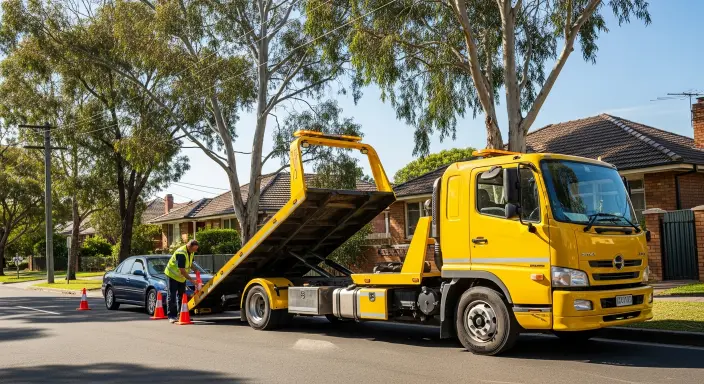
- Flatbed towing for non-starting cars
Frequently Asked Questions
How do I know if I’m being overcharged for a tow?
Ask upfront pricing. Reputable companies explain costs clearly before dispatch.
Is it embarrassing to call a tow truck for a small issue?
No. Professionals prefer early calls. Late calls are harder and riskier.
Can I choose where my car is towed?
Yes. You can request a mechanic, home, or holding yard.
Should I stay with my car while waiting?
Yes, if it’s safe. Stay visible. Use hazard lights.
What if I’m unsure what the problem is?
That’s exactly when to call. Uncertainty is a warning sign.
Final thoughts:
Here’s the honest truth.People regret not calling a tow truck far more than they regret calling one.If something feels off, it probably is.
If you’re unsure, that’s your answer.
A quick call can save:
- Your car
- Your money
- Your safety
If this is happening right now and you’re unsure what to do, help is available. A calm conversation is often all it takes to avoid a costly mistake.