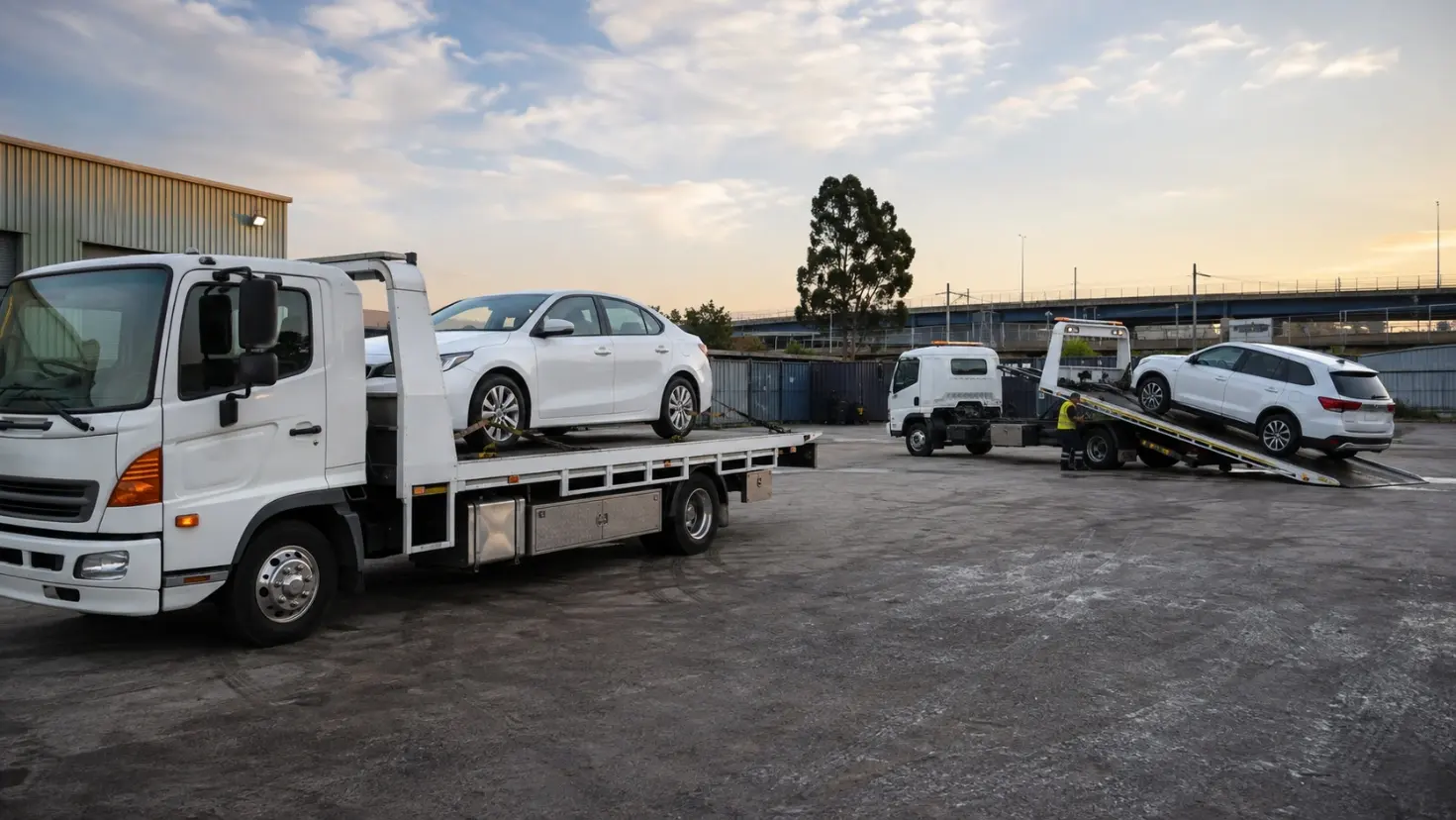
Flat Bed Vs Tilt Tray : Which Towing Option Should You Choose?
Moving a car, motorbike, van, or small machine requires the right truck and loading method. Choosing the wrong setup can make loading difficult, delay the job, or require additional equipment when the driver arrives.
Flat bed and tilt tray trucks both carry the complete vehicle above the road. This flat bed vs tilt tray guide explains which option may suit your vehicle, its condition, and the available loading space.
What Is a Flat Bed Tow Truck?
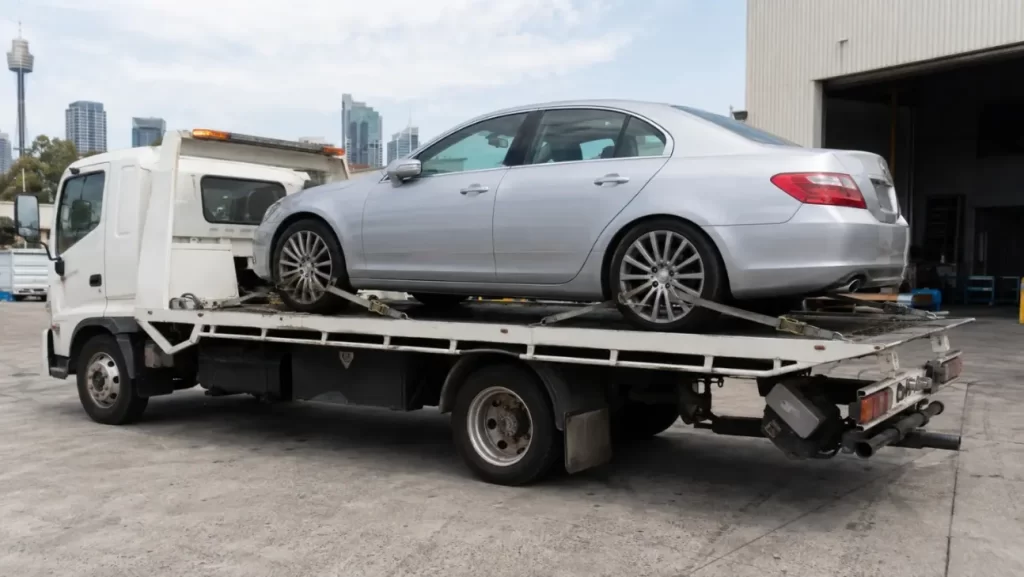
A flat bed tow truck has a fixed, level platform for carrying a vehicle or load. Depending on the truck design, the vehicle may be loaded with ramps, a winch, a lift, or other loading equipment. Flat bed trucks are often used for planned vehicle transport, working cars, SUVs, vans, and equipment that can be placed safely onto the platform. They can also suit loads that need to remain level during transport .A flat bed normally needs enough room for the loading equipment.
Common Uses for a Flat Bed Truck
A flat bed may be suitable for:
- Cars that start and move normally
- SUVs, utes, and light commercial vehicles
- Planned vehicle deliveries
- Equipment that can be loaded with ramps
- Loads that need a firm, level platform
- Longer transport jobs
The final choice still depends on the truck’s carrying capacity and the condition of the vehicle. A flat bed can also provide secure car towing in Sydney when the complete vehicle needs to remain supported above the road.
What Is a Tilt Tray Tow Truck?
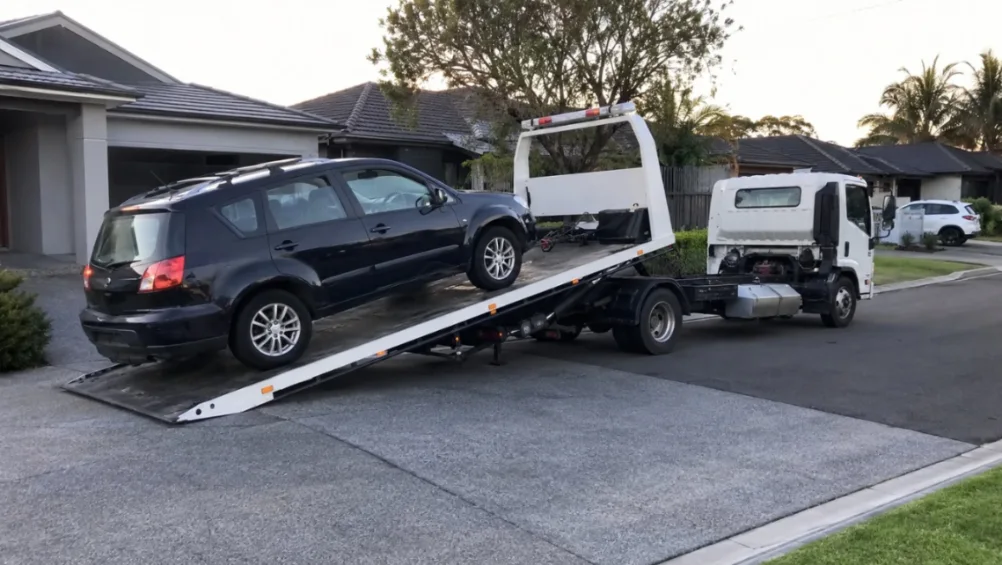
A tilt tray tow truck has a tray that moves backwards and lowers towards the ground. This creates a sloped loading surface, allowing the vehicle to be pulled onto the tray with a winch. This setup is often useful for vehicles that cannot start or drive onto the truck. The lower loading angle can also help with low cars, motorbikes, and small machinery.
Once the vehicle is in the correct position, the tray returns to a level position. This loading method is commonly used by a professional tilt tray towing service when a vehicle cannot start or drive onto the truck. The operator then secures the load before transport begins.
Common Uses for a Tilt Tray Truck
A tilt tray may be suitable for:
- Cars that will not start
- Vehicles that cannot drive onto the truck
- Cars with engine or electrical problems
- Lowered or low-clearance vehicles
- Motorbikes
- Small machinery and worksite equipment
A tilt tray needs clear space behind the truck so the tray can extend and lower. Tight driveways, parked vehicles, steep ground, or low roofs may affect whether it can be used safely.
Flat Bed Vs Tilt Tray: Quick Comparison Table
Here is a quick comparison between the two towing options.
| Comparison Point | Flat Bed Truck | Tilt Tray Truck |
| Loading method | Uses ramps, lifting equipment, or another loading system | Tray moves backwards and lowers to create a ramp |
| Best suited for | Planned transport and loads that can be placed onto the platform | Non-running vehicles and loads that need winch assistance |
| Low vehicles | May require longer ramps or support blocks | Lower loading angle is often helpful |
| Winch availability | Depends on the truck setup | Normally fitted with a winch |
| Space required | Needs room for ramps or lifting equipment | Needs clear space behind the truck |
| Common loads | Cars, SUVs, vans, and equipment | Cars, motorbikes, and small machinery |
| Main limitation | Some loads require additional loading tools | The tray needs enough room to lower fully |
This comparison is a general guide rather than a final decision. The towing company should still check the vehicle condition, access, weight, and delivery location before confirming the truck.
How Flat Bed and Tilt Tray Trucks Load Vehicles
The main difference between these trucks is how the vehicle reaches the carrying platform. Understanding the loading process makes it easier to see why one option may suit a particular job better.
How a Flat Bed Truck Works?
A flat bed truck has a solid platform that remains level during transport. The vehicle or machine is placed onto the platform using ramps, a lift, a winch, or another loading system, depending on the truck.
This option often works well for planned vehicle transport, working vehicles, commercial vans, and equipment that can be loaded safely. It normally needs firm ground and enough space around the truck for the loading equipment.
How a Tilt Tray Truck Works?
A tilt tray truck has a tray that slides backwards and lowers towards the ground. This creates a long ramp, allowing the vehicle to be pulled onto the tray with a winch.
The loading angle is often suitable for vehicles that cannot start, cars with limited ground clearance, motorbikes, and small machines. Once the load is in position, the tray returns to a level position before the vehicle is secured.
Key Factors That Decide the Right Towing Option
Choosing between flat bed vs tilt tray transport is not based only on the type of vehicle. The operator must consider how the vehicle is working and whether the truck can safely access the pickup area.
1. Whether the Vehicle Can Move
A vehicle that starts, steers, brakes, and drives normally may be suitable for ramp loading. This can make a flat bed truck a practical option for planned moves and vehicle deliveries.
A vehicle that cannot start may be easier to load with a tilt tray and winch. The operator will also need to know whether it can roll, steer, and go into neutral.
2. Wheel and Steering Condition
Locked, damaged, or missing wheels can make loading more difficult. Even when the engine problem is minor, a stuck handbrake or locked transmission can change the equipment needed.
Wheel skates, dollies, or other loading tools may be required in these situations. Sharing this information during booking helps the towing company prepare the correct setup.
3. Vehicle Ground Clearance
Ground clearance is the space between the road and the lowest part of the vehicle. Lowered cars, sports cars, and some luxury vehicles can touch a ramp when the loading angle is too steep.
A tilt tray often creates a smoother approach, while some flat bed trucks can use longer ramps or support blocks. The vehicle’s bumper, side skirts, suspension, and other modifications should be mentioned before collection.
4. Pickup and Delivery Access
The truck must be able to park close enough to load the vehicle safely. Narrow streets, parked cars, gates, slopes, low roofs, soft ground, and underground parking can all affect access.
A tilt tray requires clear space behind the truck so the tray can extend and lower. A flat bed may need side or rear space for ramps, lifting equipment, or vehicle movement.
5. Size and Weight
Every truck has a maximum carrying capacity. A truck suitable for a small car may not be able to carry a large van, heavy 4WD, forklift, or construction machine.
For normal vehicles, the make and model usually help the operator check the size and estimated weight. Machinery transport may require the exact height, width, length, and total operating weight.
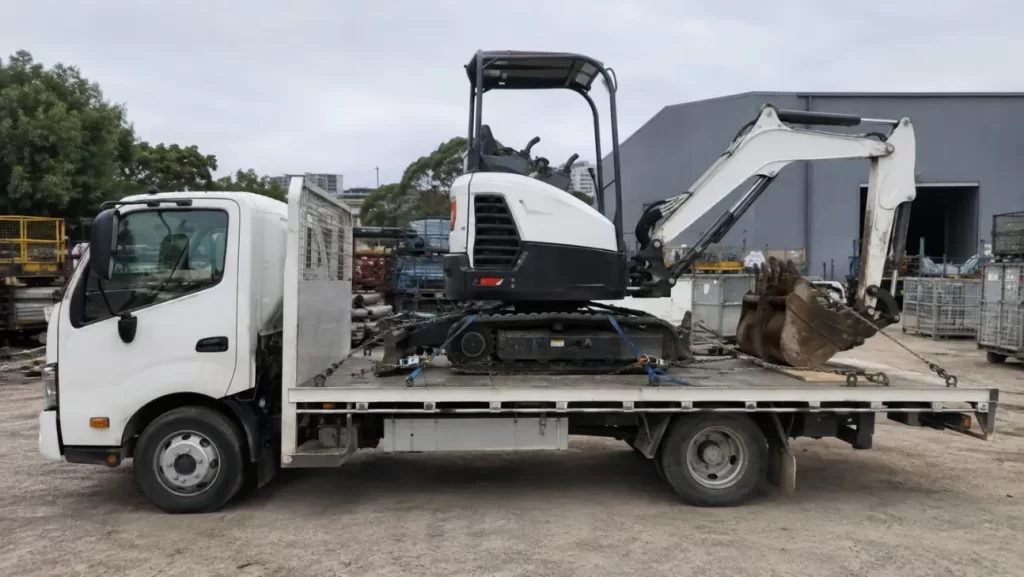
Flat Bed Vs Tilt Tray for Different Vehicles and Loads
The following guide shows which option may be more suitable for common transport jobs. The final choice will still depend on the truck’s capacity and the pickup conditions.
| Vehicle or Load | Likely Option | Main Reason |
| Standard working car | Either option | Can usually be loaded using ramps or a tray |
| Non-running car | Tilt tray | Winch allows controlled loading |
| Car with locked wheels | Tilt tray with extra tools | Wheel skates or dollies may be needed |
| Lowered or sports car | Tilt tray or suitable flat bed | A low loading angle helps protect the underside |
| SUV or work van | Either option | Truck capacity must match the vehicle weight |
| Electric, hybrid, AWD, or 4WD vehicle | Full tray transport | Keeps all wheels above the road |
| Motorbike | Tilt tray or equipped flat bed | Requires proper wheel support and straps |
| Small machinery | Either option | Depends on weight, movement, and loading access |
Safe Loading and Load Restraint
Choosing the correct truck for towing is only the first part of safe transport. With flat bed vs tilt tray transport, the vehicle or machine must also be positioned correctly and secured before the truck leaves.
The driver may use wheel straps, chains, wheel blocks, and approved restraint points. The load should remain stable during braking, turning, and normal road movement.
Before transport begins, the operator should check:
- The vehicle is centred correctly on the tray
- The weight is distributed safely
- All wheels or movement points are secured
- Straps and chains are properly tightened
- Loose parts have been checked
- The delivery instructions are confirmed
These checks apply to both truck types, as correct positioning and secure restraints help keep the vehicle stable throughout the journey. The Transport for NSW heavy vehicle safety guidance also highlights the importance of using suitable restraint systems and checking that loads remain secure during transport.
Information Needed to Book a Flatbed or Tilt Tray
You do not need to choose the exact truck before contacting a towing company. For a flat bed vs tilt tray booking, clear information allows the operator to recommend the most suitable option.
Share the following details when requesting a quote:
- Vehicle or machine type
- Make and model
- Approximate or confirmed weight
- Whether it starts
- Whether it rolls
- Whether the steering works
- Whether it can go into neutral
- Wheel and tyre condition
- Ground clearance or vehicle modifications
- Pickup and delivery addresses
- Driveway, gate, slope, or roof restrictions
- Ground conditions around the load
- Any loose, damaged, or missing parts
Photos of the vehicle and pickup area may also help with planning. They can show the available space, vehicle position, ground conditions, and possible loading problems.
Common Mistakes When Arranging Transport
Many problems happen because the booking information does not match the actual job. A vehicle described as movable may have locked wheels, or a machinery weight may be much higher than expected.
Avoid these common mistakes:
- Saying the vehicle runs when it does not
- Forgetting to mention locked wheels
- Giving the wrong make or model
- Guessing machinery size or weight
- Not checking the pickup area
- Forgetting a low car park height
- Not mentioning a steep driveway
- Providing an unclear address
- Choosing only by the lowest quote
- Assuming every tow truck has the same capacity
- Forgetting to check delivery access
Accurate information makes a flat bed vs tilt tray booking easier to plan. It also helps the operator arrive with the correct truck, tools, and loading method.
What Affects the Cost?
The price of flat bed vs tilt tray transport is not decided by the truck type alone. Two jobs using the same truck can have different costs because the distance, loading work, vehicle weight, and access may be different.
The final price may depend on:
- Pickup and delivery distance
- Distance travelled by the tow truck
- Vehicle or machinery size
- Total load weight
- Loading and unloading time
- Winch use
- Locked or damaged wheels
- Additional loading equipment
- Difficult access
- Waiting time
- After-hours service
- Special requirements for machinery
Providing complete details helps the towing company prepare a more accurate quote. It also reduces the chance of additional charges caused by information that was not provided earlier.
Specialised Transport Options Beyond Flatbeds and Tilt Trays
Flatbed and tilt tray trucks can handle many vehicles, machines, and general loads, but they are not suitable for every transport job. Equipment that is extremely heavy, oversized, unusually shaped, or difficult to load may require a more specialised truck.
Before recommending the right transport solution, the operator should confirm the load’s dimensions, weight, ground clearance, lifting points, and total travel height. This information helps determine whether a flatbed, tilt tray, low loader, side loader, crane truck, or another specialised transport solution is the best option.
Low Loaders for Tall and Heavy Machinery
A low loader has a carrying platform positioned closer to the road than a standard flatbed or tilt tray. This lower platform helps transport tall or heavy machinery while keeping the overall travel height more manageable.
Low loaders are commonly used for excavators, construction vehicles, agricultural machinery, and other oversized equipment. Some jobs may also require route planning, permits, pilot vehicles, or additional safety arrangements before transport begins.
Side Loaders for Shipping Containers
A side loader is specifically designed to lift and transport shipping containers. Hydraulic lifting arms mounted on the truck raise the container from the side and position it securely on the carrying platform.
This type of truck is generally not used for cars, motorbikes, or standard machinery transport. It needs stable ground and enough clear space beside the container so the lifting arms can operate safely.
Crane Trucks for Non-Rolling Loads
A crane truck may be required when equipment cannot roll, drive, or be safely winched onto a tray. The built-in crane lifts the load from the ground and places it directly onto the truck’s transport platform.
The operator must know the exact load weight, approved lifting points, site access conditions, and available overhead clearance. Careful planning is essential to ensure the crane can lift and position the equipment safely.
FAQ’s
Can a towing company choose the truck from photos?
Photos can help the operator check the vehicle position, ground clearance, wheel condition, and available loading space. Clear photos may make it easier to select the right truck before dispatch.
What happens if the vehicle keys are missing?
Tell the towing company before booking because missing keys can affect steering, wheel locks, and access to neutral. The operator may need wheel skates, dollies, or other loading equipment.
Can an unregistered vehicle be transported?
An unregistered vehicle can usually be carried on a suitable tow truck because its wheels remain off the road. You may need to confirm ownership or provide permission from the vehicle owner.
Do I need to remove personal items before transport?
Remove valuable, fragile, and loose items before the vehicle is collected. Items left inside may move during transport, and they may not be covered by the towing company.
Can my vehicle be collected if I am not present?
Collection may be possible when the operator has permission, access to the keys, and clear pickup and delivery instructions. Confirm these arrangements with the towing company before the truck arrives.
Can the recommended truck change after the driver arrives?
Yes, the truck or loading method may change if the vehicle condition, weight, or access is different from the booking details. Accurate information and photos can reduce the chance of this happening.
Final Recommendation
A flat bed truck is often suitable for planned transport, working vehicles, commercial vans, and loads that can be placed safely onto a level platform. It can also work well for longer trips and equipment that needs to remain level.
A tilt tray is commonly chosen for non-running vehicles, low-clearance cars, motorbikes, and small machinery. Its moving tray and winch give the operator more control when the load cannot move onto the truck by itself.
The best flat bed vs tilt tray option is the truck that can safely reach the vehicle, load it without damage, carry its full weight, and unload it at the destination. Correct information about the vehicle and location allows the towing company to make that decision before the job begins.