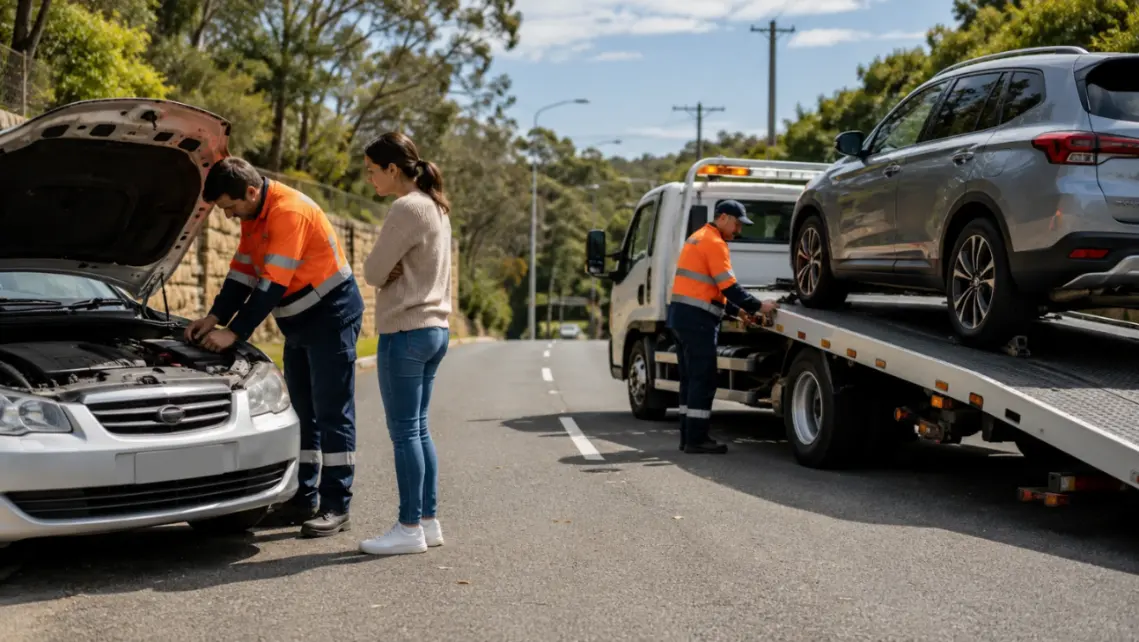
Roadside Assistance vs Towing: Which Service Do You Need?
A vehicle problem does not always mean you need a tow truck. Sometimes a flat battery, flat tyre or empty fuel tank can be handled at the roadside, allowing you to continue your journey without transporting the vehicle.
Other problems are different. If the car cannot be driven safely, has a serious mechanical issue or cannot be restarted, towing may be the more suitable option.
Understanding roadside assistance vs towing can help you explain the problem clearly, choose the right type of help and request an accurate towing quote when transport is required.
Roadside Assistance vs Towing: Key Differences
Roadside Assistance vs Towing: Key Differences
The main difference is what happens to your vehicle after help arrives.
Roadside assistance focuses on resolving certain minor problems where the vehicle has stopped. Towing is used when the vehicle cannot safely continue and needs to be transported somewhere else.
| Roadside Assistance | Towing |
|---|---|
| Help is provided at the vehicle’s location | Vehicle is transported |
| Suitable for some minor problems | Suitable when driving is unsafe or impossible |
| May allow the journey to continue | Vehicle is delivered to another location |
| Can help with batteries, tyres or fuel | Used for mechanical, wheel or mobility problems |
| Transport may not be required | Requires suitable towing equipment |
Neither service is automatically better. The right option depends on the condition of the vehicle and whether it can safely return to the road.
Problems That May Be Fixed Without Towing
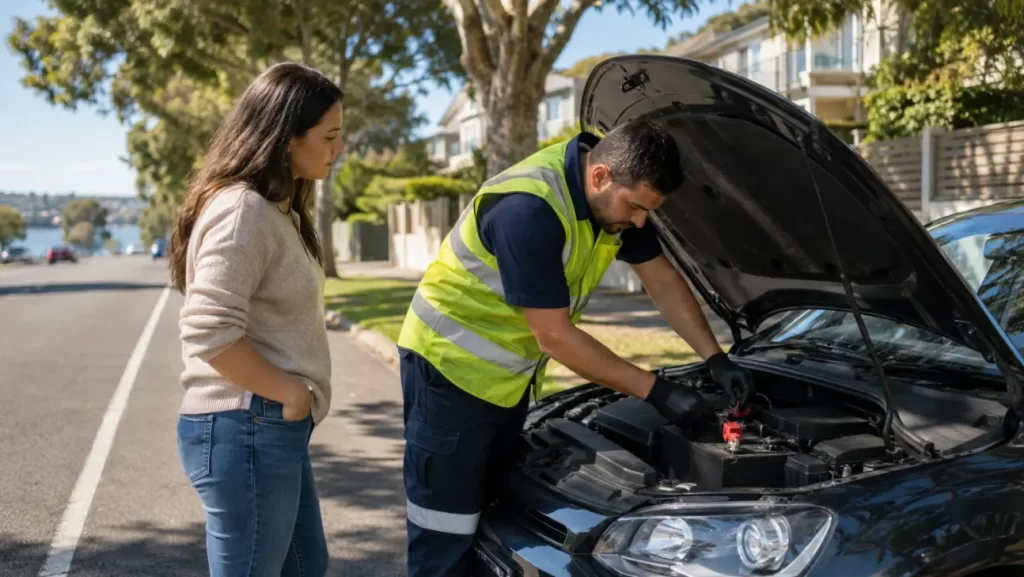
Some vehicle problems can be handled without transporting the car.
If the issue is minor and the vehicle can safely continue afterwards, roadside assistance may be enough.
Flat or Weak Battery
A discharged battery may only require a jump start service if the battery and electrical system are otherwise functioning normally.
If the engine starts and continues running, you may be able to continue your journey.
However, if the vehicle repeatedly stalls, will not restart or shows signs of a more serious electrical problem, further inspection may be necessary.
Flat Tyre
A flat tyre may sometimes be handled where the vehicle has stopped.
This may be possible when:
- A usable spare tyre is available
- The wheel can be removed normally
- The vehicle is parked in a safe location
- There is no obvious wheel damage
- The suspension appears normal
Flat tyre assistance may not be enough if there is no suitable spare, the wheel is badly damaged or changing the tyre beside the road would be unsafe.
In these situations, towing may be required.
Running Out of Fuel
Running out of petrol or diesel does not always mean the vehicle needs to be transported.
If the correct fuel can be supplied and the car starts normally afterwards, you may be able to continue driving.
If the vehicle still refuses to start after fuel is added, another mechanical or electrical problem may be involved.
Other Minor Roadside Problems
Some minor vehicle problems can also be assessed at the roadside.
The important question is whether the problem can be resolved well enough for the vehicle to continue safely.
If there is doubt about its roadworthiness, towing may be the more suitable option.
When Your Vehicle Needs to Be Towed
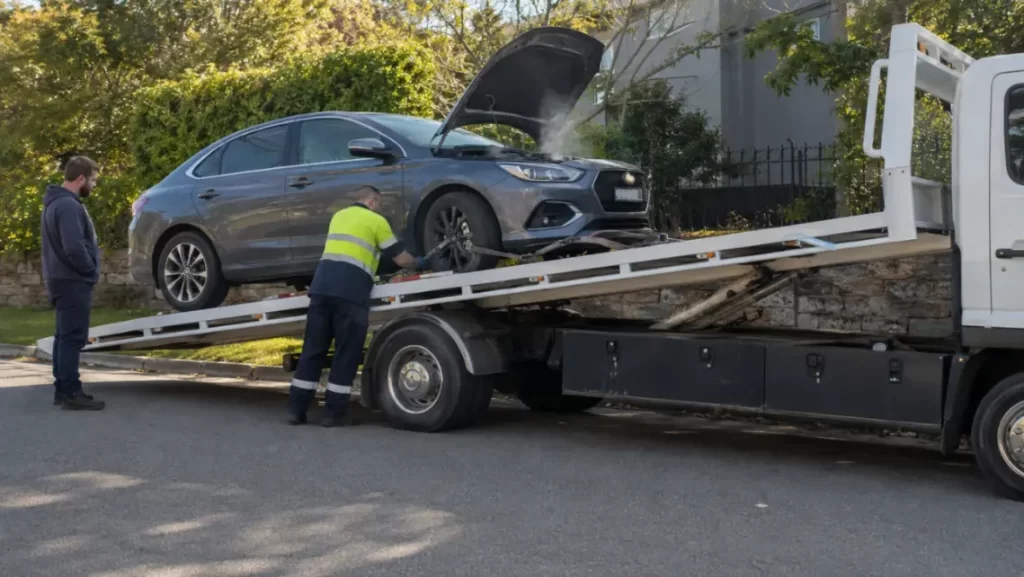
When Your Vehicle Needs to Be Towed
Roadside assistance has limits. Some vehicle problems require transport rather than trying to get the car moving again.
A professional car towing service may be more suitable when driving could create additional damage or put the driver and other road users at risk.
The Vehicle Will Not Start
If a jump start or another basic roadside check does not get the vehicle running, towing may be necessary.
The car can then be transported to:
- A mechanic
- A dealership
- An auto electrician
- Your home
- A secure storage facility
- Another suitable destination
It is useful to confirm the destination before the vehicle is loaded.
Steering Is Not Working Normally
A running engine does not mean a vehicle is safe to drive.
If the steering becomes unusually heavy, unresponsive or difficult to control, avoid continuing the journey simply because the car still moves.
Braking Problems
Problems with the braking system require particular care.
If the brake pedal feels unusual, braking performance has reduced or the vehicle is not stopping normally, continuing to drive may be unsafe.
Wheels Cannot Rotate Normally
Tell the towing provider if:
- A wheel is locked
- A tyre is badly damaged
- A wheel is bent
- The vehicle is stuck in gear
- The electronic parking brake will not release
These details can affect the equipment and loading method required.
Wheel or Suspension Damage
Damage around a wheel or suspension component may prevent a vehicle from rolling normally.
Trying to drive the car could make the problem worse. Explain what you can see or feel when requesting help so the provider can plan the pickup properly.
The Car Is Overheating
A rising temperature gauge or overheating warning should not be ignored.
Continuing to drive an overheating vehicle may increase the risk of engine damage. Stop in a safe location and arrange suitable help rather than repeatedly driving short distances to reach a workshop.
The Vehicle Keeps Stalling
A car that starts but repeatedly cuts out may still need towing.
Unexpected stalling can make driving difficult, particularly on busy Sydney roads or at intersections.
The Vehicle Cannot Be Driven Safely
This is the simplest way to understand roadside assistance vs towing.
If a minor problem can be dealt with at the roadside and the vehicle is safe afterwards, roadside assistance may be sufficient.
If it cannot safely continue, towing is usually the more appropriate choice.
What Happens When Roadside Help Ends in a Tow?
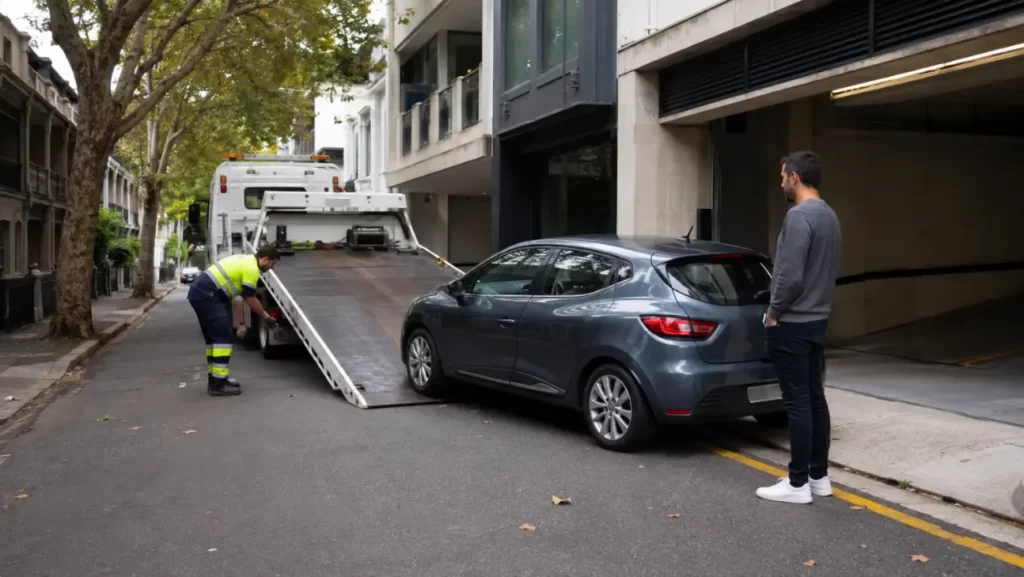
Calling for roadside assistance does not guarantee that the vehicle will be able to continue driving.
The initial problem may appear simple, but further inspection can reveal that transport is necessary.
For example, a car may initially appear to have a flat battery. If it starts after assistance but immediately stops again, taking it to a workshop may be more practical.
A tyre problem can also change. A simple puncture may be manageable with a usable spare, while a damaged wheel, missing spare or locked wheel can require towing.
Providing accurate information from the beginning helps the provider prepare for either situation.
How Location in Sydney Affects the Help You Need
Where the vehicle has stopped can influence whether roadside work is practical.
A car parked in a driveway presents a very different situation from one stopped beside a busy road or inside an underground car park.
Tell the provider if your vehicle is:
- On a motorway
- Beside a busy main road
- In an underground car park
- On a narrow street
- Behind a locked gate
- Inside a multi-storey car park
- On a steep driveway
- In an area with restricted access
When arranging a tow truck in Sydney, access information can be just as important as the condition of the vehicle.
For underground parking, provide the entrance clearance, parking level and details about narrow ramps or tight corners.
Photos of the entrance and vehicle position can also help before dispatch.
Roadside Assistance vs Towing Costs and Cover Limits
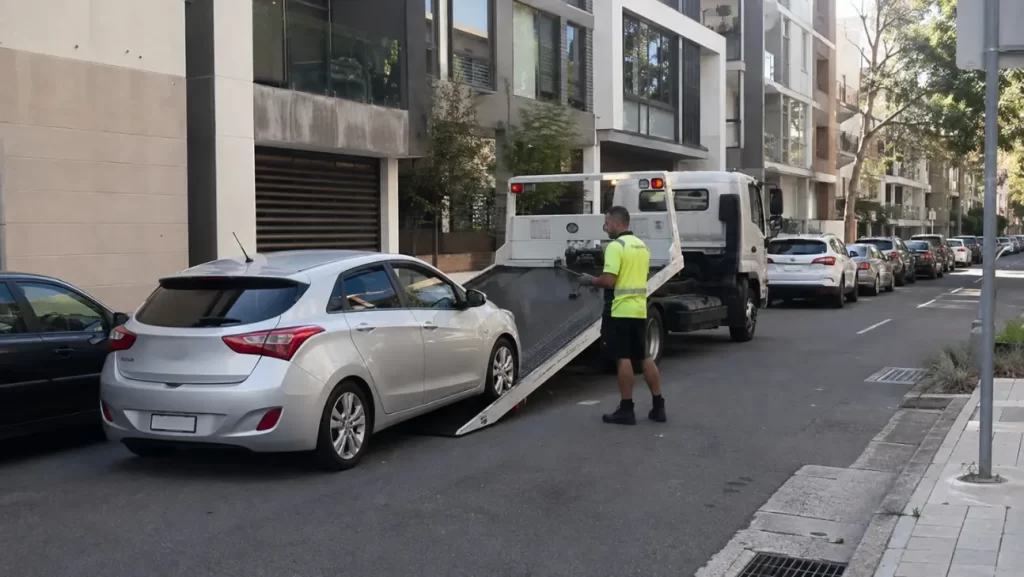
The cost of help can vary because every situation is different.
Roadside assistance generally focuses on dealing with the problem at the location, while towing involves transporting the vehicle.
Factors that may influence a towing quote include:
- Pickup location
- Delivery location
- Travel distance
- Vehicle size
- Vehicle weight
- Vehicle condition
- Wheel condition
- Access restrictions
- Equipment required for loading
If you have roadside assistance membership or insurance cover, check the terms before assuming that every service or towing distance is included.
Policies can have different limits, exclusions and conditions.
What to Do While Waiting for Help in Sydney
After arranging roadside assistance in Sydney or towing, concentrate on staying safe while you wait.
If possible and safe, position the vehicle away from moving traffic and switch on the hazard lights.
Follow NSW Government breakdown guidance when dealing with a vehicle stopped on or near a road.
While waiting:
- Keep your phone nearby
- Confirm your exact location
- Follow the provider’s instructions
- Keep children and pets away from traffic
- Avoid unsafe roadside repairs
- Stay clear of moving vehicles
- Prepare the vehicle keys
- Confirm the destination if towing is needed
Do not stand around the vehicle unnecessarily if traffic conditions make the location unsafe.
How to Choose Between Roadside Assistance and Towing
Ask one simple question:
Can the problem be resolved at the roadside so the vehicle can continue safely?
If the answer is yes, roadside assistance may be suitable.
If the answer is no, towing may be the better option.
Roadside Assistance May Be Suitable When:
- The battery only needs a jump start
- You have a manageable flat tyre
- The vehicle has run out of fuel
- The problem appears minor
- The vehicle can safely continue once the issue is resolved
Towing May Be Better When:
- The vehicle will not start
- The engine will not remain running
- A wheel is locked or damaged
- Steering is not functioning normally
- Brakes are unreliable
- The vehicle is overheating
- There is a significant mechanical problem
- The vehicle cannot safely reach a workshop
You do not need to diagnose the problem yourself. Explain the symptoms clearly and let the provider assess the most appropriate type of assistance.
Common Mistakes When Calling for Roadside Help or Towing
Many delays occur because important information is missing.
Common mistakes include:
- Providing only the suburb
- Not giving an exact vehicle location
- Saying the vehicle “won’t start” without explaining what happens
- Forgetting to mention locked wheels
- Not mentioning a flat or damaged tyre
- Failing to check underground clearance
- Not confirming the towing destination
- Assuming roadside assistance can solve every mechanical problem
- Continuing to drive when the vehicle does not feel safe
Clear information can help avoid unnecessary delays and make it easier to arrange the appropriate service.
Frequently Asked Questions
Can I choose towing even if the car still drives?
Yes, if you do not believe the vehicle can be driven safely. A vehicle that starts or moves may still require towing because of steering, braking, wheel or mechanical problems.
Does roadside assistance always include towing?
Not necessarily. Services and limits depend on the provider or membership plan. Check what is included before relying on towing as part of roadside cover.
Can roadside assistance help a car parked at home?
Yes. Roadside assistance may also be useful when a vehicle will not start at home or has another minor problem that can be addressed where it is parked.
Can a tow truck take my vehicle to any workshop?
The destination should normally be agreed before transport begins. Confirm the workshop location, opening hours and whether someone will be available to receive the vehicle.
Do I need to stay with the vehicle until help arrives?
It depends on the location and arrangements made with the provider. If you cannot remain with the vehicle, confirm how access and keys will be handled.
What happens if roadside assistance cannot fix the problem?
If the vehicle cannot be returned to a safe driving condition, towing may be required to take it to a workshop or another suitable destination.
What information should I have ready when calling?
Have your location, vehicle make and model, registration, vehicle condition and destination ready. Also mention locked wheels, low clearance, underground parking or other access restrictions.