Towing Laws Australia: A Practical Guide for Safe Towing
When you tow a trailer, caravan, boat or another vehicle, the rules are not just about getting from A to B. Towing laws Australia can affect your tow vehicle, trailer weight, tow bar, safety chains, braking setup and how safely the load is carried.
Because towing laws Australia can vary by state or territory, it is safer to check local requirements before you travel. Understanding towing capacity, weight limits and safety responsibilities can help prevent fines, equipment problems, unsafe loading and unexpected roadside delays.
What Are the Main Towing Laws in Australia?
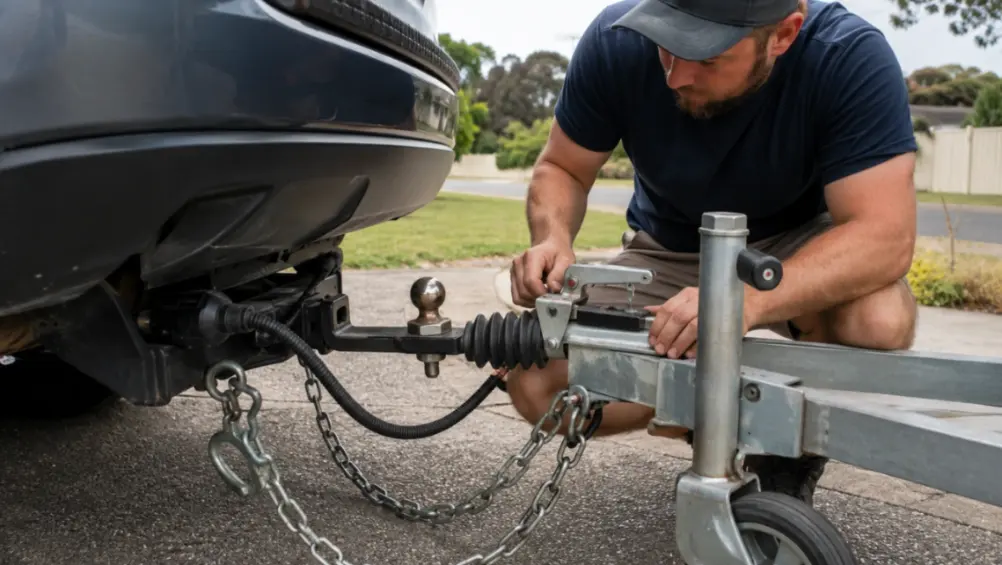
The main towing laws in Australia require the tow vehicle, trailer and load to remain within the approved weight and towing limits. The trailer must be safely connected using a suitable tow bar, coupling and safety chains, while the load must be balanced and properly secured.
Before driving, check that the brakes, tyres, lights, mirrors and towing connections are working correctly. The driver must also maintain clear visibility, keep full control of the vehicle and follow all licence, registration and road safety requirements.
Towing rules can differ between Australian states and territories. Always check the local transport authority’s requirements before towing a caravan, boat, trailer or another vehicle, particularly when carrying a heavy or unusual load..
How to Check Your Vehicle’s Legal Towing Capacity ?
Before you tow anything, check the real weight limits for both the tow vehicle and the trailer. This section is important because legal towing capacity is not based on guessing, engine size or how strong the vehicle looks.
For towing laws Australia, the safest approach is to follow the manufacturer’s ratings and keep the full towing setup within the correct limits.
Check the Vehicle Towing Capacity
Before towing, first confirm the weight your vehicle is designed to pull. You can usually find this information in the vehicle handbook, on the compliance plate, or through the vehicle manufacturer’s official details.
You should also check the towbar rating plate, because the towbar may have its own limit. If the towbar rating is lower than the vehicle’s towing capacity, the lower rating should be followed for safer towing.
Before loading the trailer, check these items:
- Vehicle towing capacity
- Towbar rating
- Trailer rating plate
- Tow ball load limit
- Gross combination mass
- Any manufacturer conditions for towing
Understand Trailer Weight Terms
Towing weight terms can feel confusing at first, but they are easier when broken into simple meanings. These terms help you understand what your vehicle and trailer can safely carry.
| Term | Meaning |
|---|---|
| ATM | Maximum loaded trailer weight |
| GTM | Weight carried by trailer wheels |
| Tare weight | Empty trailer weight |
| Payload | Extra weight added to the trailer |
| GVM | Maximum loaded vehicle weight |
| GCM | Maximum combined vehicle and trailer weight |
| Tow ball load | Weight placed on the tow ball |
These ratings should be checked before towing a caravan, trailer, boat or work load. They help you avoid going over the legal towing capacity or putting too much stress on the tow vehicle.
Why Loaded Weight Matters ?
An empty trailer may sit within the limit, but that can change quickly once you add gear. Water tanks, tools, luggage, fuel, bikes, camping items or work materials can all increase the trailer load.
Loaded weight can affect braking, steering, tyres and overall road safety. That is why drivers should check the full loaded weight, not just the empty trailer weight.
Legal Safety Requirements Before You Tow
Once the weight limits are checked, the next step is making sure the towing setup is safe to use. A trailer should not be taken on the road if the connection, brakes, lights or rear view are not working properly.
These checks are simple, but they can prevent serious problems while towing. Rules can vary by state or territory, so drivers should still check local road safety requirements before travelling.
Towbar, Coupling and Safety Chains
The towbar should be properly fitted, rated for the load and free from visible damage. The coupling should sit securely on the tow ball and lock into place before the trailer moves.
Safety chains should be attached correctly and not dragged along the road. They act as a backup connection if the trailer coupling comes loose.
Brakes, Lights and Mirrors
Trailer brakes should work properly, especially when towing heavier loads. Brake lights, indicators and rear lights should also be checked before driving.
The number plate must be easy to see, and the driver should have a clear rear view. If the trailer or caravan blocks your normal mirrors, towing mirrors may be needed.
Before you tow, check:
- Towbar is rated for the load
- Coupling is locked properly
- Safety chains are attached correctly
- Trailer brakes are working
- Brake lights and indicators work
- Number plate is visible
- Rear view is clear with mirrors
- Tyres are safe and inflated
Towing Rules by Australian State and Territory
When checking towing laws Australia wide, it is important to remember that not every rule is handled the same way in every place. Most states follow the same basic safety idea, but the details can change depending on local road rules and transport regulations.
Instead of reading long state-by-state explanations, this table gives a simple guide on what drivers should check before towing.
| State/Territory | What to Check |
|---|---|
| NSW | Towing capacity, trailer safety, brakes and load rules |
| QLD | Vehicle limits, trailer weight and braking requirements |
| VIC | Trailer setup, number plate visibility and safe loading |
| WA | Towing speed limits, following distance and trailer safety |
| SA | Trailer condition, load limits and road safety rules |
| TAS | Trailer safety, weight limits and towing setup |
| ACT | Vehicle capacity, load security and road rules |
| NT | Long-distance towing safety and trailer condition |
Why Towing laws Australia Can Change by State ?
Towing rules can change by state because each transport authority manages its own road safety requirements. This means things like speed limits, trailer equipment, enforcement and road conditions may not always be the same across Australia.
Before towing across state borders, drivers should check the rules for the area they will be driving through. This is especially useful for caravan trips, remote travel and long-distance towing.
Safe Loading and Driving While Towing
Safe towing is not only about what your vehicle can pull. How you load the trailer and how you drive on the road can make a big difference to stability, braking and control.
A poorly loaded trailer can sway, pull to one side or put extra pressure on the tow vehicle. Before driving, take a few minutes to check the load, tyres and trailer position.
How to Load a Trailer Safely ?
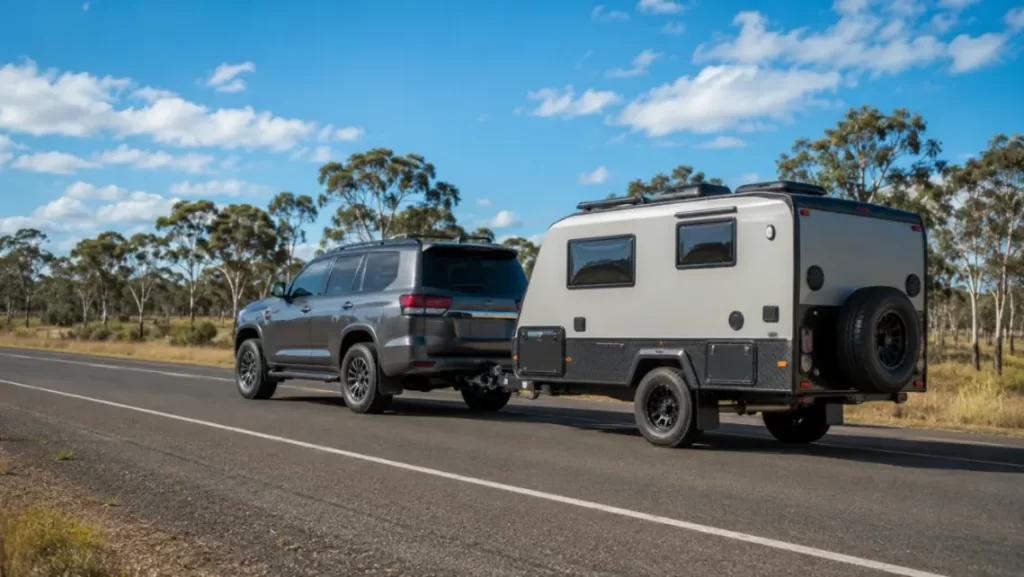
A trailer should be loaded in a way that keeps it steady and balanced. Heavy items should sit low and close to the centre, not stacked high or pushed too far back.
Before you leave, check:
- Keep heavy items low and centred
- Do not overload the rear
- Secure the load with proper straps
- Keep the trailer level
- Check tyre pressure
- Recheck straps during long trips
- Avoid sudden braking and sharp turns
Common Towing Mistakes to Avoid
Many towing problems happen because small checks are missed before driving. These mistakes can make the trailer harder to control, especially at higher speeds, on wet roads or during long trips.
Avoid these common mistakes:
- Exceeding towing capacity
- Ignoring loaded trailer weight
- Using the wrong towbar
- Driving with faulty lights
- Not using mirrors when needed
- Poor weight balance
- Driving too fast while towing
- Towing a damaged vehicle without proper equipment
When You Should Call a Professional Tow Truck
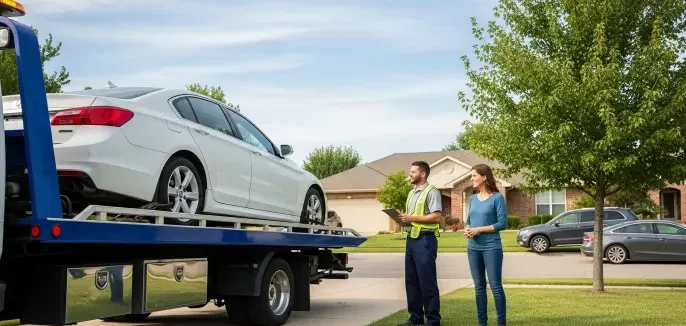
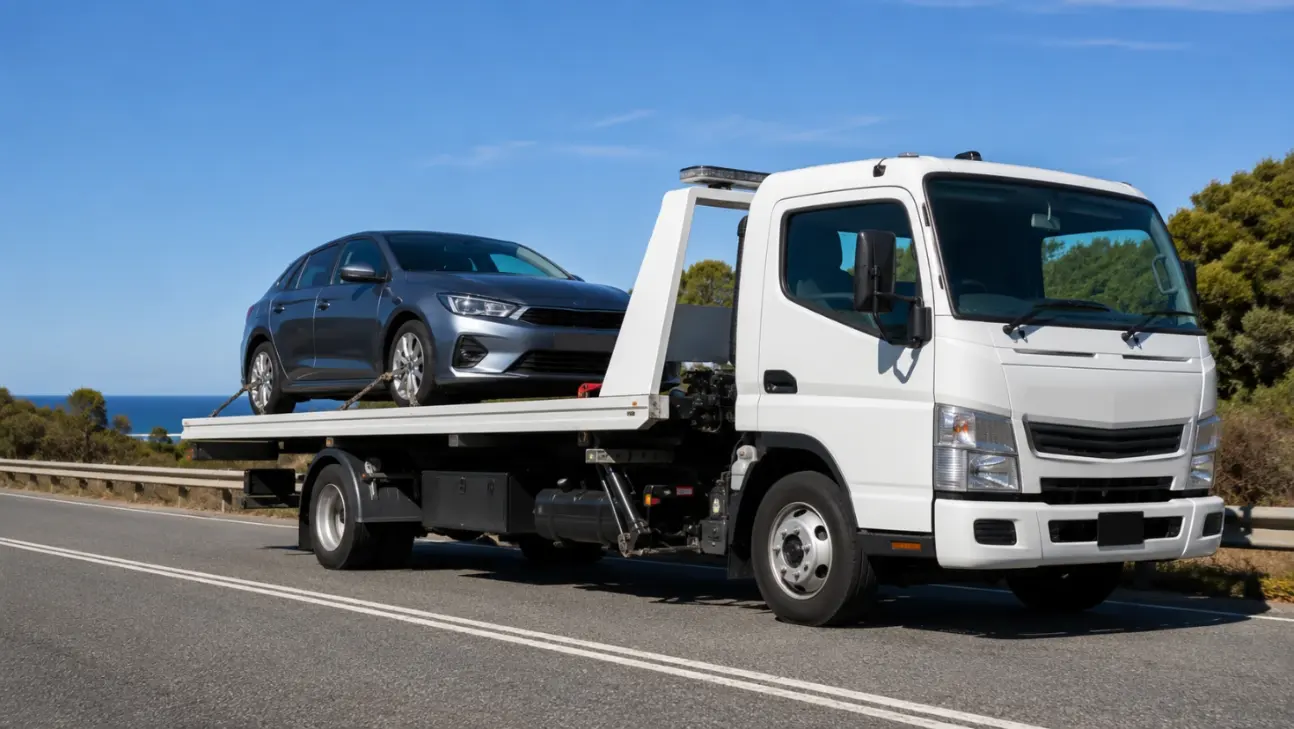
Not every towing situation should be handled with a private vehicle or trailer. If the vehicle is damaged, stuck, unstable or unsafe to drive, a professional tow truck is usually the safer choice.
This is especially important when the vehicle cannot move normally, the location is difficult, or the trip is too far for a simple roadside fix.
After an Accident or Breakdown
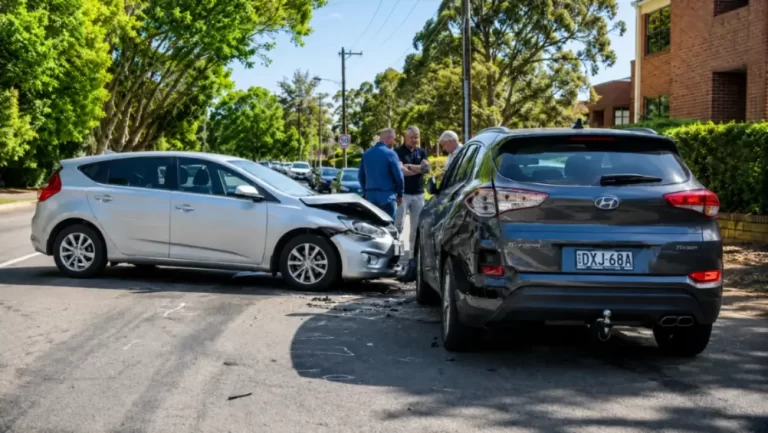
After an accident, a damaged vehicle may not be safe to tow privately. Even if it looks movable, there could be hidden damage to the steering, suspension, wheels or brakes.
A professional accident towing service can move the vehicle with the right equipment and reduce the risk of further damage. The same applies after a serious breakdown where the car cannot be driven safely.
When the Vehicle Is Stuck or Unsafe to Move
You should call for help if the vehicle has a flat tyre, blocked wheels, steering problem or brake issue. Trying to move it without the right setup can make the situation worse.
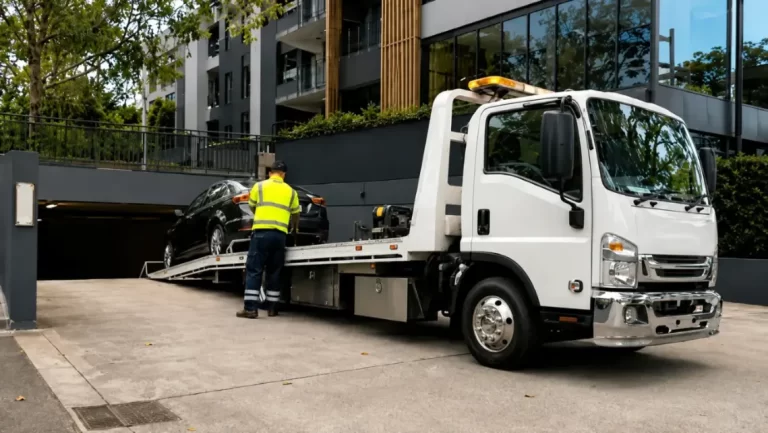
Professional towing is also useful when a car is stuck in underground parking, a tight driveway or a low-clearance area. These places often need careful access, not force.
For Long-Distance or Special Vehicle Towing
Long-distance towing is safer when the vehicle needs to travel across suburbs, cities or regional roads. A tow truck can carry the vehicle properly instead of putting stress on another car.
Professional services can also help with car towing, boat towing, trailer towing, machinery towing and roadside assistance. This is helpful when the load, distance or vehicle type needs more care than normal towing.
Where to Confirm Official towing laws Australia ?
Before relying on general advice, it is always better to confirm towing laws Australia from official sources. This matters because towing rules, road conditions and enforcement can vary depending on where you are driving. For example, conditions may be different when driving through busy areas like Alexandria, coastal roads near Bondi Beach or longer routes around the Blue Mountains.
Use these sources to double-check the correct information before towing:
- State or territory road authority
- Vehicle owner’s manual
- Manufacturer towing guide
- Trailer compliance plate
- Towbar rating plate
- National Heavy Vehicle Regulator for heavy vehicles
- Australian trailer standards where relevant
For normal trailer or caravan towing, your state road authority and vehicle manufacturer are usually the best places to start. For heavy vehicles or commercial towing, the National Heavy Vehicle Regulator may also be relevant.
FAQs
Q 1. Can I tow a car with a rope in Australia?
Rope towing can be unsafe, and rules can vary by state or territory. If the vehicle is damaged or unroadworthy, a professional tow truck is usually safer.
Q 2. Can passengers travel in a caravan or trailer while towing?
Passengers should not travel in a caravan or trailer while it is being towed. It can be unsafe and may cause legal or insurance issues.
Q 3. What happens if my trailer is overloaded?
An overloaded trailer can cause fines, poor handling, braking problems and accident risk. It may also affect insurance if a crash happens.
Q 4. Do towing laws apply to boat trailers and work trailers?
Yes, towing rules can apply to boat trailers, box trailers, work trailers and caravans. Drivers should check the rules for the trailer type they are using.
Q 5. Should I use a tow truck instead of towing a vehicle myself?
Use a tow truck if the vehicle has accident damage, brake issues, steering problems, flat tyres or blocked wheels. It is safer for stuck or unsafe vehicles.
Conclusion
Understanding towing laws Australia helps drivers tow with more confidence and avoid unsafe situations on the road. Before towing, always check your vehicle limits, trailer weight, safety equipment and local road rules. Because towing laws Australia can vary by state or territory, official sources should be checked before any long trip. If a vehicle is damaged, stuck or unsafe to move, calling a professional tow truck is often the safer choice.