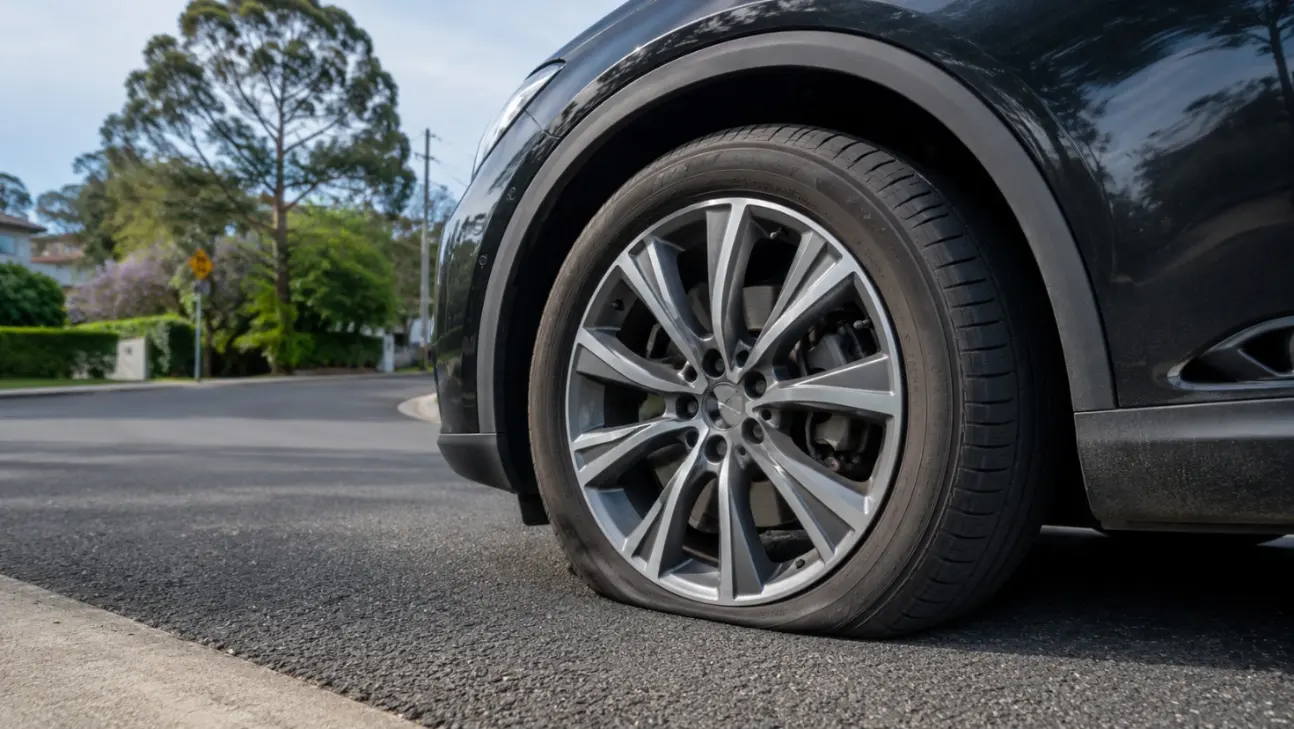
Run Flat Tyres: Everything You Need to Know Before Driving
A sudden loss of tyre pressure can leave you wondering whether you need to stop immediately or whether the car can still be driven. Run flat tyres are designed to give drivers limited mobility after pressure is lost, which can make a puncture easier to manage.
They do not make a damaged tyre safe for normal driving. How far you can continue depends on the tyre, vehicle, road conditions and manufacturer instructions.
For Sydney drivers, understanding how run-flat technology works can help you decide whether to continue carefully to a tyre shop, stop in a safer location or arrange a Sydney towing service when driving further is not suitable.
What Are Run Flat Tyres?
Run flat tyres are tyres designed to support a vehicle for a limited period after losing air pressure.
A standard tyre relies heavily on air pressure to maintain its shape and carry the vehicle’s weight. When most of that pressure is lost, the tyre can collapse towards the wheel.
Many run-flat designs use strengthened sidewalls that provide additional support when pressure drops. This can give the driver time to reach a safer location or arrange professional help.
How Do Run Flat Tyres Work?
Most self-supporting run-flat designs use reinforced sidewalls.
When a standard tyre loses air, the sidewall may no longer be able to hold the vehicle at its normal height. A reinforced run-flat sidewall is designed to carry more of that load for a limited period.
This allows the wheel to continue turning without the tyre immediately collapsing around the rim. Continental, for example, describes its self-supporting system as using a reinforced sidewall to prevent the sidewall being crushed between the rim and road after pressure loss.
Why Tyre Pressure Monitoring Is Important
Loss of pressure in a run-flat tyre may not always feel as obvious as it would with a conventional tyre.
That is why tyre-pressure monitoring is particularly important. A warning on the dashboard can alert the driver before the tyre’s condition becomes obvious from the way the vehicle feels.
Michelin states that vehicles using its run-flat fitment need a tyre-pressure monitoring system and should be approved by the vehicle manufacturer for self-supporting tyres.
Do not ignore a tyre-pressure warning simply because the tyre still looks normal.
How Can You Tell If Your Car Has Run Flat Tyres?
Do not assume a vehicle has run-flats because it does not have a spare wheel.
Start by checking the tyre sidewall. Depending on the manufacturer, there may be a marking identifying the tyre as a run-flat or extended-mobility design.
You can also check:
- Your vehicle owner’s manual
- The original tyre specification
- Information supplied with the vehicle
- The tyre manufacturer’s product information
- Advice from a qualified tyre professional
If you are still unsure, have the tyre identified before relying on it after a puncture.
This is particularly important on used vehicles because the tyres may have been changed since the car left the factory.
What Happens When a Run Flat Tyre Loses Pressure?
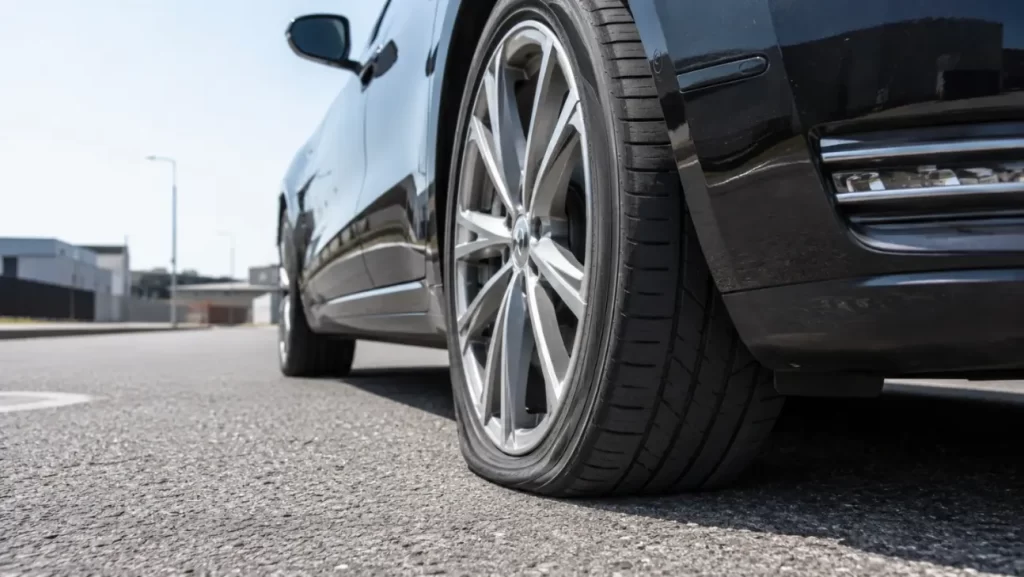
A tyre pressure warning may be the first sign that something is wrong. Because the sidewalls remain supported, the tyre may not look completely flat from the outside.
If the warning appears:
- Reduce your speed smoothly.
- Avoid sudden braking or sharp steering.
- Pay attention to vibration, pulling, noise or changes in steering.
- Move towards a safe place where possible.
- Check your vehicle handbook and tyre manufacturer’s instructions before deciding whether to continue driving.
Do not assume the tyre is safe just because the vehicle can still move.
How Far Can You Drive on a Run Flat Tyre?
Some run-flat systems may allow driving for up to around 80 km at speeds of no more than about 80 km/h after pressure loss.
However, this is not a standard limit for every tyre.
The safe distance can vary depending on:
- Tyre design
- Vehicle model
- Vehicle load
- Road surface
- Temperature
- Type of puncture or damage
- How long the tyre has already been driven with low pressure
Always follow the limits provided by the tyre manufacturer and your vehicle handbook.
When You Should Stop Earlier
You should not try to use the full permitted distance if the vehicle no longer feels safe.
Stop somewhere safe and arrange help if you notice:
- Strong vibration or repeated thumping
- Heavy pulling to one side
- A bent or damaged wheel
- A cut, split or badly damaged sidewall
- The tyre coming away from the wheel
- Smoke or unusual heat
- A burning smell
- A noticeable change in steering or vehicle control
If the vehicle cannot be driven safely, a car breakdown towing service can transport it without putting more pressure on the damaged tyre or wheel.
How to Tell If Your Car Has Run Flat Tyres
The easiest place to start is the writing on the tyre sidewall.
Different tyre manufacturers use different markings for run-flat products. Some Michelin run-flat tyres, for example, use markings such as ZP or EMT.
You can also check:
- Your owner’s handbook
- The tyre placard
- The original vehicle specification
- Information supplied by the tyre manufacturer
If you are still unsure, a tyre professional can check what type of tyres are fitted to your vehicle.
Why the Tyre Pressure Warning Matters
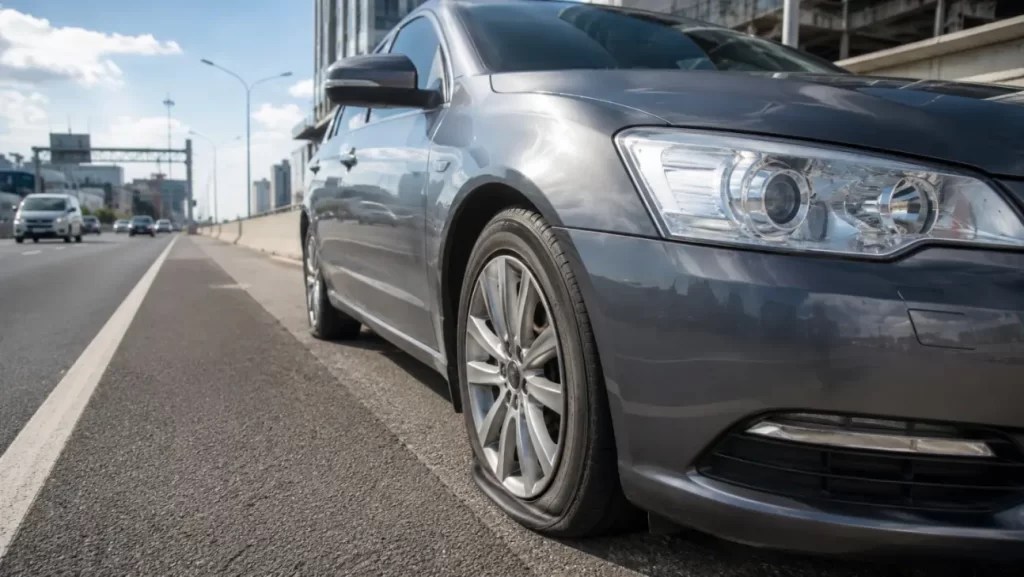
A run-flat tyre may continue supporting the vehicle after pressure drops, but its performance has changed.
Handling may feel different, and the amount of distance available before the vehicle needs to stop is limited.
If a pressure warning appears:
- Reduce your speed smoothly. Avoid sudden braking or sharp steering.
- Pay attention to the vehicle. Stop if you notice strong pulling, vibration, unusual noise or poor steering response.
- Check the tyre when it is safe. Look for obvious cuts, sidewall damage or wheel damage without standing close to moving traffic.
- Check the manufacturer’s instructions. Confirm the permitted speed and distance for your exact tyre and vehicle.
- Arrange an inspection or help. Do not continue using the tyre normally simply because the car still moves.
If you cannot safely assess the problem, flat tyre assistance may be a better option than guessing whether the tyre can continue.
How Far Can You Drive on Run Flat Tyres?
There is no single distance that applies to every run-flat tyre.
The permitted distance depends on factors such as:
- Tyre manufacturer and model
- Vehicle specification
- Vehicle load
- Road conditions
- Driving speed
- Amount of tyre damage
Some well-known manufacturers publish limits of around 80 km of continued mobility at speeds up to about 80 km/h for certain run-flat products. However, that should not be treated as a universal rule. Michelin and Continental both publish product-specific guidance, and the instructions for your own tyre and vehicle should take priority.
A puncture, sidewall cut, wheel impact or other serious damage may mean you should stop much sooner.
If you do not know the limit for your tyres, do not assume that an 80 km figure applies.
Run Flat Tyres vs Standard Tyres
Both types of tyre are designed for normal road use when properly inflated, but they behave differently after major pressure loss.
| Feature | Run Flat Tyres | Standard Tyres |
|---|---|---|
| After pressure loss | May provide limited continued mobility | Usually should not be driven normally |
| Sidewall design | Often reinforced | Relies more heavily on air pressure |
| Spare tyre | Some vehicles may not carry one | A spare or repair kit may be provided |
| Pressure warning | Particularly important | Important for normal tyre care |
| Ride feel | Can differ depending on tyre and vehicle | Depends on tyre design and vehicle |
| After a puncture | Requires inspection | Requires inspection or repair |
| Replacement | Must suit vehicle requirements | Must suit vehicle requirements |
Run-flat technology provides convenience after some punctures, but this does not mean it is automatically the best tyre choice for every vehicle.
Can a Run Flat Tyre Be Repaired?
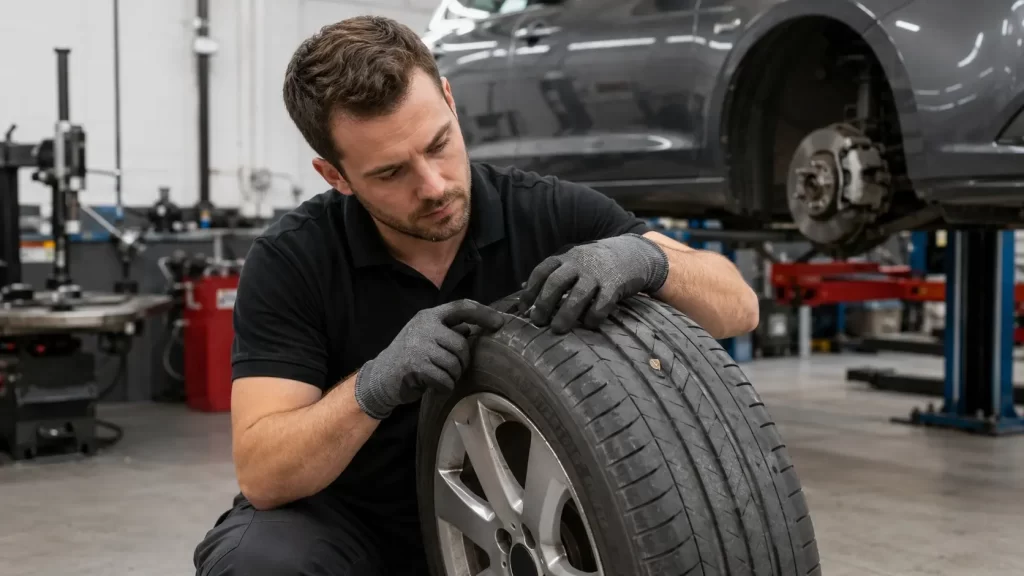
Sometimes, but not every damaged run-flat tyre should be repaired.
Whether repair is possible depends on:
- Where the puncture occurred
- Size and type of damage
- Condition of the sidewall
- Internal tyre damage
- Distance driven after pressure loss
- Speed while the tyre was deflated
- Tyre manufacturer’s repair policy
Damage within the main tread area may sometimes be repairable after professional inspection. Sidewall or structural damage is much more concerning because the sidewall carries an important load after pressure is lost.
Tyre manufacturers can also have different repair requirements, so a tyre should be assessed rather than repaired based only on how the puncture looks from outside. Michelin’s tyre-repair guidance also stresses that pu
When Replacement May Be Needed
Replacement is more likely when the tyre has:
- Serious sidewall damage
- A large cut or tear
- Internal structural damage
- Been driven beyond its permitted limits
- Multiple damaged areas
- Excessive tread wear
- Bulges, cracking or other signs of deterioration
A tyre professional can inspect both the outside and inside before deciding whether the tyre should return to service.
Can You Replace Run Flat Tyres With Standard Tyres?
Do not assume that changing from run-flat to conventional tyres is a simple like-for-like replacement.
Tyres form part of the way the vehicle has been designed to steer, carry loads and respond on the road. Wheel specifications, suspension setup and manufacturer requirements may also need to be considered.
Before changing tyre type:
Check the vehicle handbook and ask a qualified tyre professional whether standard tyres are approved for your exact model.
You should also consider what you will use if a standard tyre becomes flat. Some vehicles originally designed around run-flat technology may not carry a full-size spare.
The safest approach is to follow the vehicle manufacturer’s tyre specifications rather than choosing tyres only by size.
What Should You Do If a Run Flat Tyre Loses Pressure in Sydney?
Sydney roads can make tyre problems difficult to manage, particularly during busy traffic or in locations with limited roadside space.
If a tyre-pressure warning appears, avoid making a sudden stop in a traffic lane. Reduce your speed smoothly and look for somewhere safer.
In areas such as the Sydney CBD, finding enough space to inspect a tyre may be difficult. The same applies on busy routes around North Sydney, where stopping beside moving traffic may leave little room around the vehicle.
Once safely positioned, check the vehicle handbook and assess whether the tyre appears damaged.
Do not continue simply because the vehicle still feels driveable.
When Is Towing Better Than Continuing to Drive?
Run-flat technology is useful only when the tyre and vehicle remain within their permitted operating conditions.
Continuing to drive may not be the right choice if:
- The tyre has a visible cut or torn sidewall
- The wheel has been damaged
- The vehicle pulls heavily to one side
- Steering becomes difficult
- Strong vibration develops
- You hear repeated knocking or scraping
- More than one tyre is affected
- You do not know how long the tyre has been underinflated
- The tyre has already reached its manufacturer-specified driving limit
In these situations, a car towing service can transport the vehicle without requiring you to keep driving on the affected tyre.
Towing may also make sense when you are stopped somewhere that is unsuitable for roadside tyre work.
Are BMW Run Flat Tyres Different?
The phrase BMW run flat tyres is commonly searched because run-flat technology has been offered on a range of BMW vehicles and wheel packages.
However, you should not assume every BMW uses them.
BMW Australia currently lists some genuine wheel and tyre packages with run-flat tyres, while other BMW vehicles and configurations may use different tyre solutions. Always check the actual tyres fitted to your vehicle rather than relying only on the badge or model.
If replacing tyres on a BMW, follow the specifications for the exact model, wheel size and tyre setup.
How to Look After Run Flat Tyres
Run-flat capability does not remove the need for normal tyre maintenance.
Check tyre pressure regularly when the tyres are cold and use the pressure recommended by the vehicle manufacturer.
Also inspect the tyres for cuts, cracking, bulges and uneven wear.
A tyre-pressure warning should be investigated rather than repeatedly reset.
Wheel alignment should also be checked if you notice unusual or uneven tyre wear.
NSW roadworthiness guidance says tyres must be in good condition, have at least 1.5 mm tread depth, be inflated to the recommended pressure and not have cracks, bumps or uneven wear.
Keeping up with these NSW roadworthiness requirements can also help identify tyre problems before they leave you stopped on the road.
FAQs About Run Flat Tyres
Are Run Flat Tyres Puncture-Proof?
No. They can still be punctured or damaged. Their main advantage is that certain designs can continue supporting the vehicle temporarily after pressure is lost.
Can You Drive Normally After a Run Flat Tyre Is Punctured?
No. Continued mobility is limited. Reduce your speed and follow the exact guidance provided for your tyre and vehicle.
How Far Can You Drive on a Run Flat Tyre?
There is no universal distance. Some manufacturers publish limits around 80 km for particular products, but your tyre and vehicle instructions should always be checked first.
Can Run Flat Tyres Be Repaired?
Some may be repairable depending on the puncture, tyre condition and manufacturer requirements. The tyre should be professionally inspected before a repair decision is made.
Do Run Flat Tyres Need Air?
Yes. They are designed to operate at the vehicle’s recommended tyre pressure during normal use. Run-flat capability only provides temporary support after pressure loss.
Do All BMWs Have Run Flat Tyres?
No. Tyre equipment can vary between BMW models, wheel packages and vehicle specifications. Check the tyre sidewall and vehicle information for your exact car.
Do You Need a Spare Tyre With Run Flat Tyres?
Some vehicles equipped with run-flats do not carry a spare. Check what equipment your vehicle provides rather than assuming a spare is included.
Should You Tow a Car With a Damaged Run Flat Tyre?
Towing can be the better choice if the tyre has serious damage, handling has changed, the wheel is damaged or the tyre’s permitted driving range has been reached.