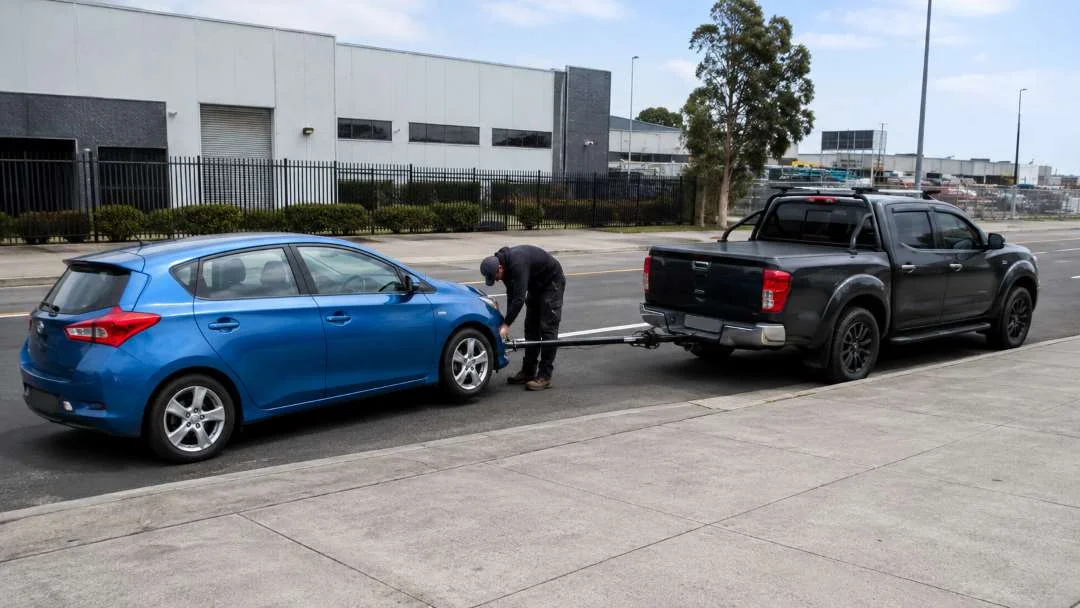
How to Tow a Car With a Car Safely on NSW Roads
Knowing how to tow a car with a car can be useful when a vehicle breaks down and another vehicle is available to help. However, connecting two cars and driving away is not always safe or suitable, especially on busy Sydney roads.
NSW has specific rules covering control of the towed vehicle, the distance between vehicles and the way they are connected. If the situation is unsuitable for car-to-car towing, Sydney towing trucks can provide a more controlled way to move a vehicle without relying on a second driver.
This guide explains the practical and legal points Sydney drivers should consider before attempting a tow. It focuses on NSW requirements, so motorists travelling elsewhere should check the rules applying in that state or territory.
Is It Legal to Tow a Car With Another Car in NSW?
The short answer is that towing one car with another is possible in NSW, but only when the towing arrangement complies with the road rules and the vehicle can be controlled safely. Asking can I tow a car should therefore be followed by a second question: is this particular vehicle safe and suitable to tow?
NSW Road Rule 294 requires the towing driver to be able to control the movement of the towed vehicle, or the towed vehicle must have working steering and brakes with a properly licensed person controlling them. The rule also requires the tow itself to be safe.
The Towed Car Must Remain Under Control
When the towed vehicle relies on another person to control it, that person must be licensed to drive the vehicle and sit in the driver’s seat. The steering and brakes must also be working well enough for that person to control the car safely.
This matters because the second driver needs to steer around bends, keep the towline appropriately tensioned and brake without running into the towing vehicle. If steering or braking has failed, ordinary car-to-car towing may not meet the required conditions.
Distance and Towline Rules Matter
Under the current NSW Road Rules, the space between the towing vehicle and the vehicle being towed must not exceed four metres. If the vehicles are joined by rope, chain or wire, a clearly visible red flag or another suitable warning object must be displayed between them.
There are also additional lighting requirements when towing at night. Because visibility and communication become more difficult after dark, professional transport may be the more practical option rather than attempting an improvised tow.
| NSW towing check | What you need to know | Why it matters |
|---|---|---|
| Vehicle control | The towed vehicle must remain controllable | Reduces loss of steering or braking control |
| Driver in towed car | A licensed driver is generally required when relying on its steering and brakes | Allows the car to be actively controlled |
| Distance | Generally no more than 4 metres between the cars | Keeps the combination manageable |
| Rope, chain or wire | A visible red flag or suitable warning marker is required | Alerts other road users |
| Towing capacity | Vehicle and attachment limits must not be exceeded | Prevents an unsuitable towing setup |
| Night towing | Additional lighting requirements apply | Keeps the combination visible |
Check Both Cars Before You Start Towing
Learning how to tow a car with a car starts before either vehicle moves. Both vehicles need to be assessed because a problem with the towing car can be just as dangerous as a problem with the disabled vehicle.
Do not assume that a vehicle is suitable simply because its engine still starts or its wheels turn. Weight, braking ability, steering, attachment points and manufacturer instructions can all affect whether the tow should go ahead.
Check the Vehicle Doing the Towing
The towing vehicle needs enough capacity to manage the additional load safely. NSW rules for relevant vehicles under 4.5 tonnes restrict the laden weight of the vehicle being towed according to the capacity of the towing attachment and the applicable maximum towing weight.
Before moving, check the towing vehicle’s:
- Manufacturer towing limits
- Approved towing or recovery attachment point
- Brakes and tyres
- Steering and suspension
- Mirrors and rear visibility
- General mechanical condition
A small or lightly built car may not be suitable for towing a significantly heavier vehicle. If there is uncertainty about weight or attachment points, arranging car towing Sydney may avoid putting both vehicles at risk.
Check the Car Being Towed
The disabled car needs particular attention because some faults make conventional towing unsafe. The steering must respond correctly, and the brakes need to function if a second driver will be controlling the vehicle.
Also check whether the vehicle can roll freely and whether the parking brake releases normally. Locked wheels, damaged steering, serious suspension problems or a vehicle stuck in gear can make another towing method necessary.
Safe Steps for Towing a Car With Another Vehicle
Once you know the vehicles are legally and mechanically suitable, the next concern is controlling the complete towing combination. The aim should be smooth, predictable movement rather than simply pulling the disabled car hard enough to make it move.
Both drivers should understand what will happen before starting. Agree on the route, signals and stopping procedure while both vehicles are stationary.
Connect Only to Suitable Attachment Points
A tow rope, strap or other connection should be attached only to points designed or approved for towing or vehicle recovery. Attaching equipment to bumpers, suspension parts or other unsuitable components can damage the vehicle or allow the connection to come free.
Check the vehicle handbook if the correct attachment point is not obvious. Some vehicles use removable towing eyes, while others have designated attachment points that may be hidden behind a bumper cover.
If a rope, chain or wire is used in NSW, remember that the required warning marker must remain clearly visible between the vehicles. The connection should also comply with the distance requirements discussed earlier.
Agree on Signals Before Moving
Communication between both drivers is essential because the rear driver cannot control the speed set by the towing vehicle. Decide beforehand how either driver will signal that they need to slow down or stop.
The towing driver should pull away gently instead of suddenly taking up slack in the connection. Sharp acceleration can place a heavy shock load on the towing points and make the rear vehicle difficult to control.
Drive Smoothly and Allow More Time
Acceleration, braking and cornering should all be gradual. The combined movement of two vehicles requires more planning than normal driving, particularly when approaching intersections or changing direction.
The rear driver should concentrate on steering and maintaining safe separation without allowing excessive slack to develop. Both drivers should avoid sudden actions that can cause jerking or make the towing connection unstable.
When Car-to-Car Towing Can Become Unsafe
Understanding how to tow a car with a car also means recognising when not to attempt it. A vehicle may be capable of rolling but still be unsuitable because its mechanical condition prevents safe control.
Sydney traffic can make these problems more serious. Congested intersections, multilane roads, hills and frequent stopping leave less room for error between two connected vehicles.
Loss of Steering or Braking Assistance
When the engine of the towed car is switched off, power-assisted steering or braking may be reduced or unavailable on some vehicles. The steering wheel and brake pedal can therefore require much more effort than the rear driver expects.
If the brakes or steering cannot be controlled reliably, do not continue with an ordinary towline setup. NSW rules specifically require safe control of the towed vehicle.
Automatic, AWD, Hybrid and Electric Vehicles
Modern drivetrains can have specific requirements about whether driven wheels may rotate while the vehicle is being transported. Incorrect wheel-on-ground towing can potentially affect transmissions, electric drive systems or other drivetrain components.
Check the owner’s manual before towing an automatic, all-wheel-drive, hybrid or electric vehicle. If the manufacturer’s instructions require the wheels to be lifted or the vehicle to be carried, a flatbed or tilt-tray arrangement may be more suitable.
Busy Roads and Longer Distances
A method that might appear manageable over a very short, quiet distance can become much harder in Sydney traffic. Frequent braking, roundabouts, hills, traffic lights and lane changes increase the amount of coordination needed between both drivers.
If a breakdown occurs somewhere unsafe, it may be better to move people away from traffic and seek roadside assistance Sydney rather than attempting to organise a tow beside moving vehicles. Roadside help may also solve a minor problem without transporting the car.
When a Tow Truck Is the Better Choice
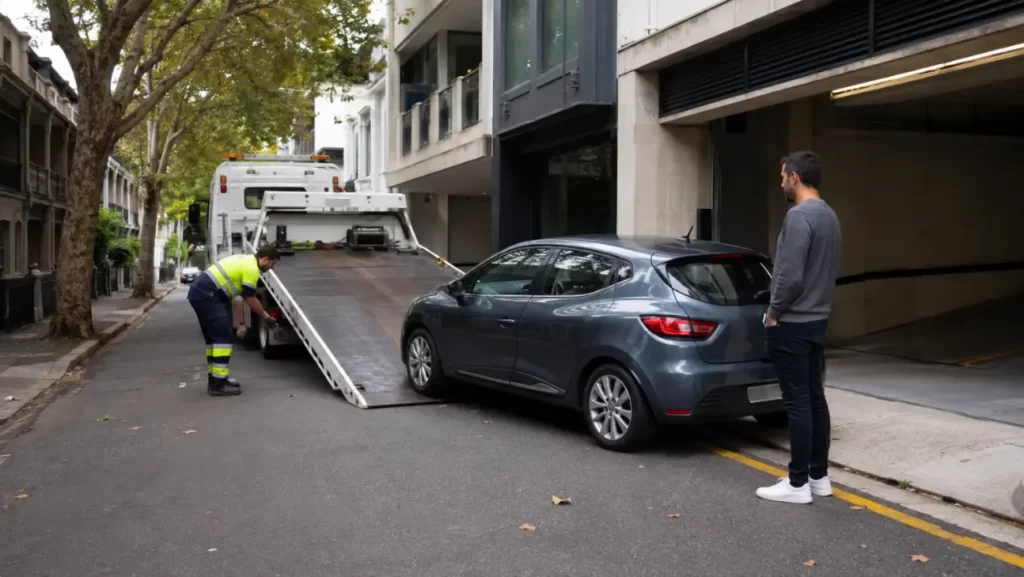
Car-to-car towing is not suitable for every breakdown. A tow truck allows the disabled vehicle to be loaded or supported using equipment intended for vehicle transport instead of depending on another passenger car to pull it.
Professional towing becomes particularly useful when vehicle condition, distance or road environment makes a towline arrangement difficult to control. It can also remove the need for a second licensed driver to steer and brake a disabled car during the journey.
Choose Professional Towing for Mechanical Problems
A professional tow should be considered when the vehicle has:
- Failed or unreliable brakes
- Steering damage
- Locked wheels
- Serious suspension problems
- A transmission that cannot be placed in the required position
- Significant tyre or wheel damage
- Manufacturer restrictions on wheel-on-ground towing
These problems can make conventional towing difficult even if another car is powerful enough to pull the vehicle. A suitable towing service can select a loading method based on the actual condition of the car.
Consider the Route as Well as the Vehicle
The condition of the car is only one part of the decision. Underground parking, steep driveways, narrow streets, motorways or a longer transport distance may make a professional tow more practical.
The safest choice is not always the method that gets the vehicle moving fastest. Consider how the complete journey will be managed before connecting two vehicles.
Common Mistakes to Avoid When Towing Another Car
Many problems occur because drivers focus on getting the disabled car moving instead of considering how it will stop, turn and remain controlled. Good preparation reduces the chance of damaging either vehicle or creating a hazard for other road users.
NSW rules require the towed vehicle to remain safely controlled and also place limits on towing capacity. Checking the current NSW Legislation for vehicle towing before attempting a car-to-car tow can help you understand these legal requirements and avoid an unsuitable setup.
When working out how to tow a car with a car, avoid these common mistakes:
- Using an unidentified or unsuitable attachment point
- Ignoring the towing vehicle’s rated capacity
- Attempting to tow a car with faulty steering or brakes
- Accelerating suddenly to tighten a slack towline
- Failing to use the required warning marker
- Attempting a complicated route without planning it first
- Ignoring manufacturer towing restrictions
- Continuing when either driver feels unable to control the vehicles
Stopping and changing the towing plan is better than continuing with a setup that has become difficult or unsafe to control. If either vehicle cannot meet the required towing conditions, a different transport method may be more appropriate.wing plan is better than continuing with a setup that has become difficult to manage. Vehicle condition can also change once the tow begins.
Frequently Asked Questions
These questions cover some of the practical concerns Sydney drivers commonly have when one vehicle needs to move another. NSW requirements should always be checked alongside the individual vehicle manufacturer’s instructions.
Can I Tow a Car With Another Car in NSW?
Yes, in certain circumstances, but NSW rules require the towing arrangement to be safe and the towed vehicle to remain under proper control. Requirements also apply to the driver controlling the towed vehicle, the distance between vehicles and towline warning markers.
If the vehicle cannot steer or brake properly, a conventional towline setup may not be appropriate. A tow truck may provide a safer method of transport.
How Far Apart Can Two Cars Be When Towing in NSW?
NSW Road Rule 294-3 states that the space between the two vehicles must generally not exceed four metres. Different distance requirements apply if either vehicle is a motorcycle.
Drivers should not simply use a long rope because it appears easier to attach. The connection must comply with NSW requirements and remain manageable on the road.
Do You Need a Driver in the Car Being Towed?
Generally, when the towed motor vehicle relies on its own steering and brakes for control, a licensed person needs to be in charge of it. Limited exceptions can apply where specific authorisation has been provided.
The second driver must be able to control the vehicle safely. A person sitting behind the wheel does not make the setup suitable if the brakes or steering have failed.
Can You Tow an Automatic Car With Another Car?
It depends on the vehicle. Automatic transmissions vary, and some manufacturers restrict how far or how fast a vehicle can be moved with driven wheels on the ground.
Check the owner’s manual before attempting the tow. Where the manufacturer’s instructions do not allow conventional towing, professional vehicle transport is the better option.
Can You Tow a Car With a Rope in NSW?
Yes, but the towing setup must comply with NSW road rules. If a rope, chain or wire is used, a clearly visible red flag or suitable warning marker must be displayed between the vehicles.
Can You Tow a Car at Night in NSW?
Yes, but additional visibility requirements apply when towing after dark. Both vehicles must remain properly visible to other road users, and the towing arrangement must still be safe and controllable.